CURRENT PROJECT
Strengthening infrastructures for peace in Iraq, Somalia, and Yemen
Towards social cohesion through inclusive mechanisms for conflict transformation
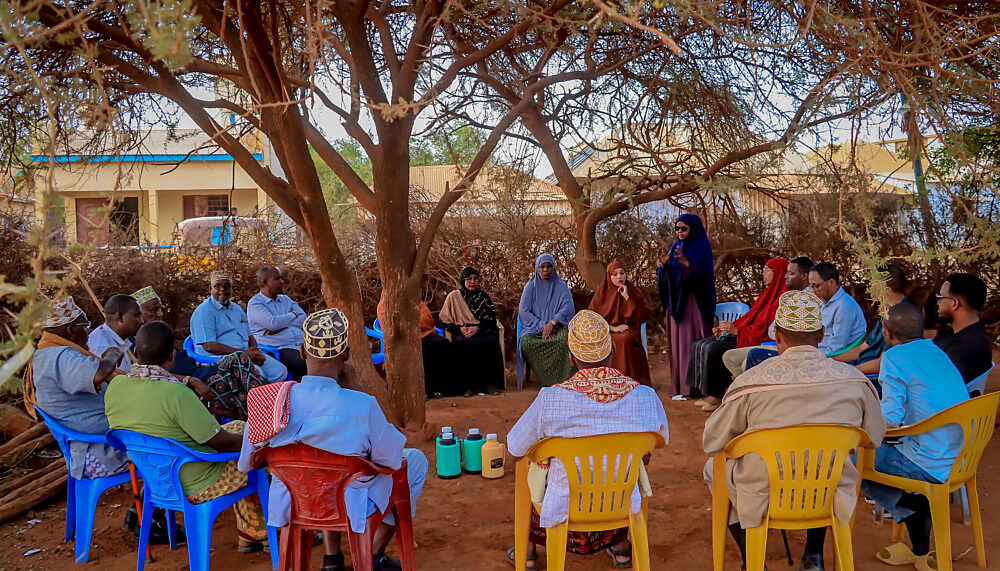
The overall goal of Berghof Foundation’s infrastructures for peace programme in Iraq, Yemen, and Somalia is to strengthen conflict transformation mechanisms.
Timeframe: 2024 - 2031
In this cross-country 7,5 year-long programme we aim to strengthen the foundations for long-term stability and peace in Iraq, Somalia, and Yemen by fostering social cohesion, resilience, and trust in conflict-affected societies. We support inclusive, locally grounded approaches to peace that respond to the complex realities on the ground.
Across these diverse contexts, we work with local partners to:
- Create and protect spaces for inclusive dialogue
- Strengthen local peacebuilding capacities and resources
- Support participatory mechanisms that complement existing governance structures
- Advocate for policies that promote peace and reconciliation at all levels
Our work also focuses on key thematic areas that shape both practice and policy:
- Insider mediation: Supporting trusted local actors to mediate and resolve conflict from within their communities.
- Conflict, environment, peace, and security: Addressing the environmental dimensions of conflict and promoting climate-sensitive peacebuilding.
- Mental Health and Psychosocial Support (MHPSS): Integrating insights from psychology and neuroscience into peacebuilding and peacemaking efforts.
Background information
Protracted conflict contexts, such as Iraq, Somalia, and Yemen, present a tapestry of multi-dimensional and interconnected challenges, each with its own unique conflict system. However, they all share a common characteristic: the erosion of trust and social cohesion within society and towards the respective governments and formal institutions. External interventions in these contexts have often proven to be inadequate, ineffective and unsustainable and tended to cause more harm than good, as illustrated by numerous top-down pacification efforts or short-term development, state-building and nation-building projects. Based on this insight, Berghof's programme, Infrastructures for peace: Towards social cohesion through inclusive mechanisms for conflict transformation, aims to strengthen the system’s own resources by enhancing endogenous, local capacities, with an emphasis on infrastructures for peace. Infrastructures for peace are a dynamic network of structures, mechanisms, processes, and associated components such as skills, capacities and resources, that – taken together – help build constructive social and political relationships and enhance societal resilience against relapse into violence. Evidence has shown that infrastructures for peace foster constructive relationships of trust with formal and informal institutions, increase social cohesion, and enhance the resilience of societies, making it more likely for these societies to prevent and transform conflicts constructively, thus laying the foundations for long-term stability and sustained peace.
In Iraq, our work focuses on strengthening community resilience and fostering inclusive dialogue in the face of climate-related challenges and displacement. Together with the local organisation Peace Paradigms, we facilitate dialogues at both community and governorate levels in Basra, bringing together internally displaced persons (IDPs), returnees, host communities, and local authorities. These conversations aim to rebuild trust and improve local governance. Complementing this, an external research study explores the intersection of climate change, migration, and conflict across multiple governorates.
In Somalia, building on existing work in Galmudug and Hirshabelle, the programme will set up an Insider Peacebuilders Network (IPN) in Southwest State whose members receive support to carry out mediation, dialogue formats and awareness-raising activities in their communities. A locally produced radio programme amplifies peace messages and fosters public dialogue. Through a dedicated Women, Peace and Security (WPS) component, we provide training, peer exchange, and research opportunities for women peacebuilders across three federal states, strengthening their role in shaping peaceful futures.
In Abyan and Aden, Yemen, we are expanding our support for inclusive local governance and community-led peace efforts together with our local partner, the Political Development Forum. Consultative committees bring together communities and decision-makers to resolve conflicts and foster dialogue. We strengthen the capacities of committee members, local authorities, and civil society actors in mediation and collaborative governance. Research on environmental conflict drivers as well as on the cooperation opportunities between Abyan and Aden informs our approach, while small grants enable local peace initiatives. An added climate component supports advocacy for integrating environmental concerns into peace processes and improving mediation of related conflicts.
Activities
Yemen
In Aden and Abyan, we support consultative committees that bring together local authorities and civil society to facilitate dialogue and address local challenges collaboratively. We promote mediation, coordination, and joint problem‑solving, while building local capacities for conflict resolution and peacebuilding. Through locally driven initiatives and small grants, we help develop practical solutions that improve service delivery and foster trust, social cohesion, and resilience within communities.
Iraq
In Basra’s Midaina district, we supported dialogue among agricultural stakeholders, leading to a locally owned agreement. We are now working with partners to turn these efforts into sustainable conflict-resolution mechanisms and strengthen cooperation on water management to reduce resource-related tensions. At the national level, we are collaborating with the Higher Authority for Inter-Governorate Coordination to co-design a framework for managing climate- and water-related conflicts across governorates through consultations, technical exchanges, and a dedicated task force.
Somalia
We support peacebuilders from Southwest State in their local efforts for peace. Through a participatory research process, we identified key challenges to peace, climate resilience, and social cohesion in the districts of Baidoa, Barawe, and Hudur. With targeted capacity development, networking opportunities, and micro‑grants, we enable peacebuilders to increase their impact and improve conditions in their communities. We also support women peacebuilders from Hirshabelle, Galmudug, and Southwest State. Through capacity development, peer‑learning, and networking, they strengthen their approaches to addressing gender‑related drivers of conflict and take on a more active role in local peacebuilding.
Partners and funding
The project is funded by and implemented in close collaboration with the Ministry of Foreign Affairs of the Netherlands (Department for Stabilisation and Humanitarian Assistance).
Local partners:
- Political Development Forum in Yemen
- Peace Paradigms Organization in Iraq
- Insider Peacebuilders Network in Somalia
Related projects
Find out more about other projects in the countries:
Somalia
- Celebrating ten years of peacebuilding and conflict transformation in Somalia
- Community peacebuilders promoting reconciliation in Hirshabelle and Galmudug States, Somalia
- Infrastructures for peace and environmental peacebuilding in Galmudug and Hirshabelle State, Somalia
- Insider peacebuilders resolving local conflicts in Somalia
Yemen
- Yemen Political Dialogue Support Programme
- Strengthening inclusive local governance and peacebuilding in Yemen
- Community safety partnerships
- Keeping doors open in Yemen
Iraq
Updates from this work:
- How can Germany turn climate security commitments into action? 9 Sept 2026
- From trauma to trust 19 Jun 2026
- Lessons on climate, environment, peace, and security 21 May 2026
- Video: Dealing or healing? 13 May 2026
- Insider mediators in a new era 23 Apr 2026
- Video: Water, conflict and governance in fragile contexts 24 Mar 2026
- Video: Women peacebuilders at the centre 3 Mar 2026
- From climate stress to social strain 18 Feb 2026
- Advancing women's leadership for climate and peace 17 Oct 2025
- Still struggling to give “P” a chance? 28 Jul 2025
- Video: Psychology and peacemaking 19 Jun 2025
Publications from this project:
- Environmental entry points for peacemaking in Yemen
2026
- علم النفس في صنع السلام. دليل للوسطاء والمفاوضين
Charlotte Hamm. 2026
- من الضغوط المناخية إلى الضغوط الاجتماعية. الهجرة، والحوكمة، والقدرة المحلية على الصمود في العراق
2026
- La psicología en el establecimiento de la paz. Guía para mediadores y negociadores
Charlotte Hamm. 2026
- From climate stress to social strain. Migration, governance and local resilience in Iraq
2026
- Water, land and power: Environmental conflict drivers in Abyan, Yemen
Summer Nasser. 2025
- المياه والأرض والسلطة: المحــــــركـــات البيئية للــــصراع في أبين، اليمن
Summer Nasser. 2025
- Psychology in Peacemaking. A Guide for Mediators and Negotiators
Charlotte Hamm. 2025
Project lead
Melanie Plöger
Senior Project Manager
email hidden; JavaScript is required
Team members
Pablo Agüera Reneses
Pascal Grimm
Nike Löble
Khaled Urfa
Media contact
You can reach the press team at:
+49 (0) 177 7052758
email hidden; JavaScript is required