FEATURE | 18 Feb 2026
From climate stress to social strain
Migration, governance and local resilience in Iraq
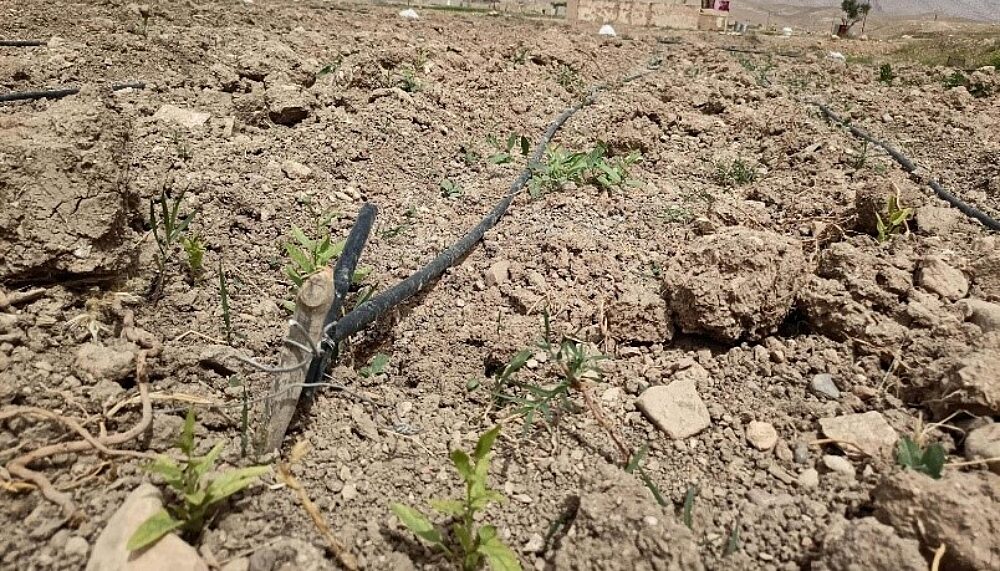
Climate change in Iraq is no longer a distant environmental threat. Our new report explores how climate stress is reshaping local governance and social stability.
Across Iraq, rivers are shrinking, wells are running dry and agricultural livelihoods are collapsing. Rising temperatures, prolonged droughts and chronic water shortages are no longer exceptional events but everyday realities.
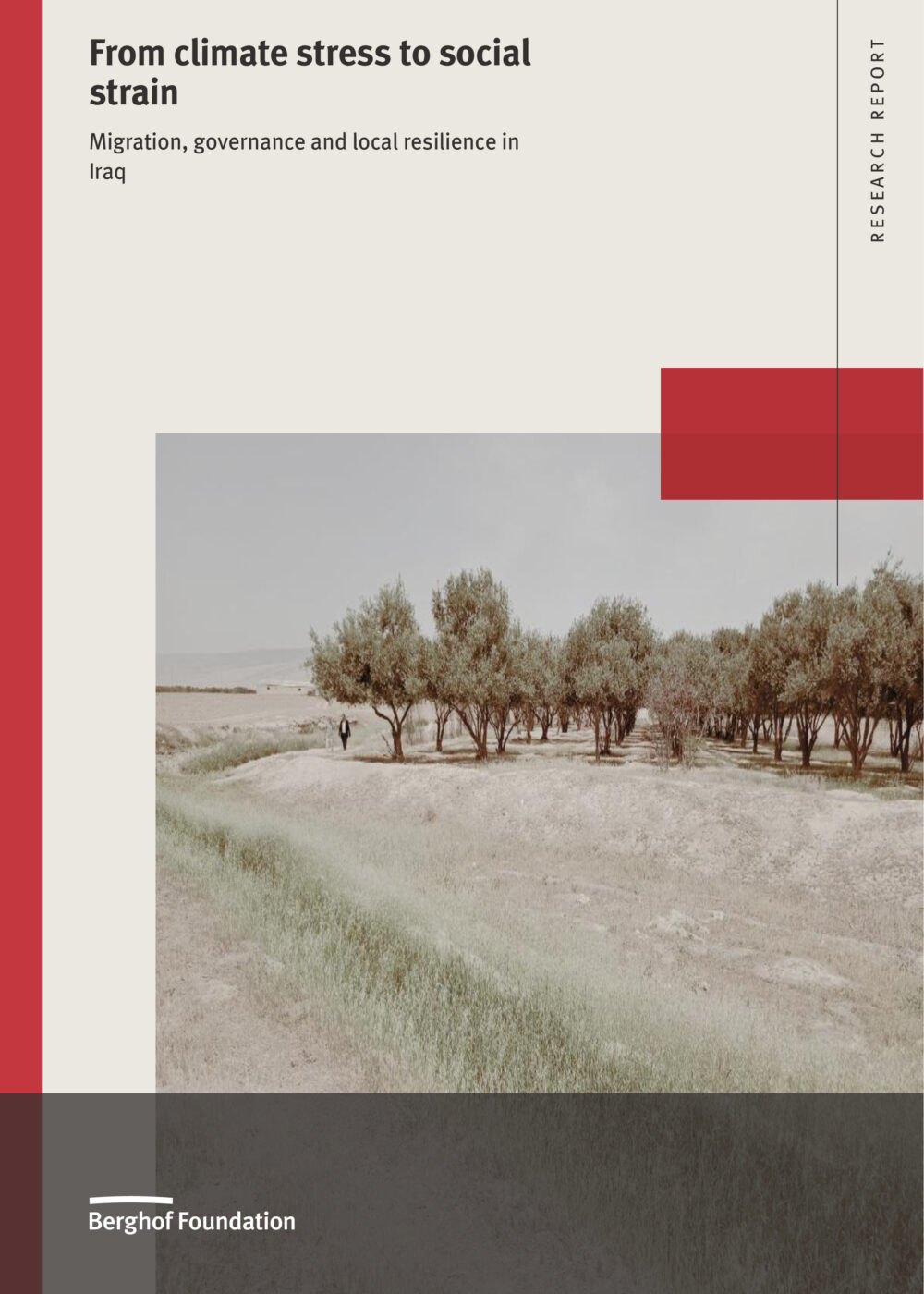
Our new synthesis report, based on a broader in-depth study conducted in the governorates of Diyala, Kirkuk, Nineveh and Al-Sulaymaniyah, examines how climate stress is transforming local realities across the country. Drawing on communities’ lived experiences, the research reveals how environmental pressures interact with fragile institutions, accelerate mobility and reshape governance, while also highlighting the locally rooted mechanisms that help contain tensions and strengthen resilience.
Climate change as a threat multiplier
In a country already weakened by decades of conflict and institutional fragility, environmental stress is pushing both communities and governance systems to their limits. The findings confirm that climate change rarely triggers conflict on its own. Instead, it acts as a threat multiplier, intensifying existing grievances linked to poor service delivery, damaged infrastructure and weak trust in state institutions.
By amplifying underlying vulnerabilities, environmental stress exposes the critical role of governance in shaping whether scarcity leads to cooperation or confrontation.
Migration as an adaptive strategy
Environmental stress is steadily transforming migration patterns across Iraq. As water scarcity and desertification undermine agriculture and livestock, farmers and herders are often the first to move in search of alternative livelihoods.
Mobility typically begins as an adaptive strategy. Seasonal or temporary relocation to nearby towns allows families to diversify income while maintaining ties to their rural communities. However, when drought persists and services fail to recover, temporary moves increasingly become permanent.
These shifts have visible consequences in both rural and urban areas. Rural communities face depopulation and economic decline, while urban centres experience mounting pressure on housing, water supply and employment. At the same time, changing demographics reshape social relations. New arrivals from rural areas may rely on different social norms and conflict resolution practices, which can create social distance from long-term urban residents.
The findings highlight how in the absence of inclusive integration mechanisms and adequate service provision, these differences can weaken social cohesion, heighten perceptions of inequality and contribute to localised tensions.
When institutions fall short, communities step in
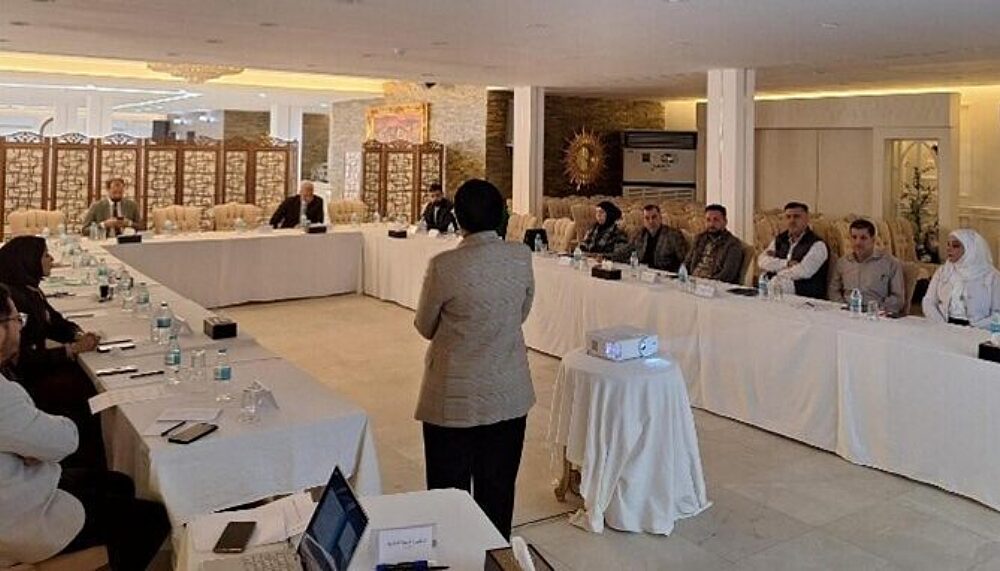
Where formal authorities are slow, underfunded, or absent, informal governance structures fill the gap.
Tribal and religious leaders as well as community committees negotiate water-sharing arrangements, mediate disputes and coordinate emergency responses. In parts of Kirkuk, farmers follow locally agreed irrigation schedules to prevent conflict over depleted canals. In Diyala, tribal representatives meet weekly to negotiate water access. In Al-Sulaymaniyah, neighbourhood committees organise tanker deliveries to villages with dry wells.
These locally rooted systems often enjoy high levels of trust and can be more responsive than formal institutions in containing everyday disputes. However, their reach and capacity remain limited, especially when challenges scale up.
Women at the centre, but outside the room
Women play a central role in managing household and community resources. They coordinate water access, ease tensions and support displaced families. Yet they remain largely excluded from formal decision-making spaces.
Civil society initiatives in parts of Al-Sulaymaniyah and Kirkuk show that women’s participation is both possible and beneficial, improving communication and cooperation. Still, these examples remain exceptions rather than the rule.
Climate adaptation as peacebuilding
The research highlights that climate adaptation in Iraq is not simply a technical challenge. It is fundamentally a question of governance, participation and trust.
Infrastructure projects, early-warning systems and livelihood support can either strengthen cohesion or deepen grievances, depending on how decisions are made and who is included. Where informal and formal actors collaborate, communities can turn scarcity into an opportunity for dialogue and cooperation. Where coordination fails, drought accelerates fragmentation and erosion of social trust.
Our findings underscore a clear conclusion: as climate pressures intensify, Iraq’s response must combine inclusive governance, locally-led mediation and targeted investment. Resilience already exists at the grassroots. Whether environmental stress drives cooperation or conflict will depend less on rainfall levels than on the capacity and inclusiveness of governance.
Read the full synthesis to explore how communities across Iraq are responding to challenges related to climate change and find out about our evidence-based recommendations to support community resilience and prevent conflicts.
Media contact
You can reach the press team at:
+49 (0) 177 7052758
email hidden; JavaScript is required