Our Library
Explore our publications, from research papers and series to educational materials, covering all aspects of conflict transformation and peace promotion.
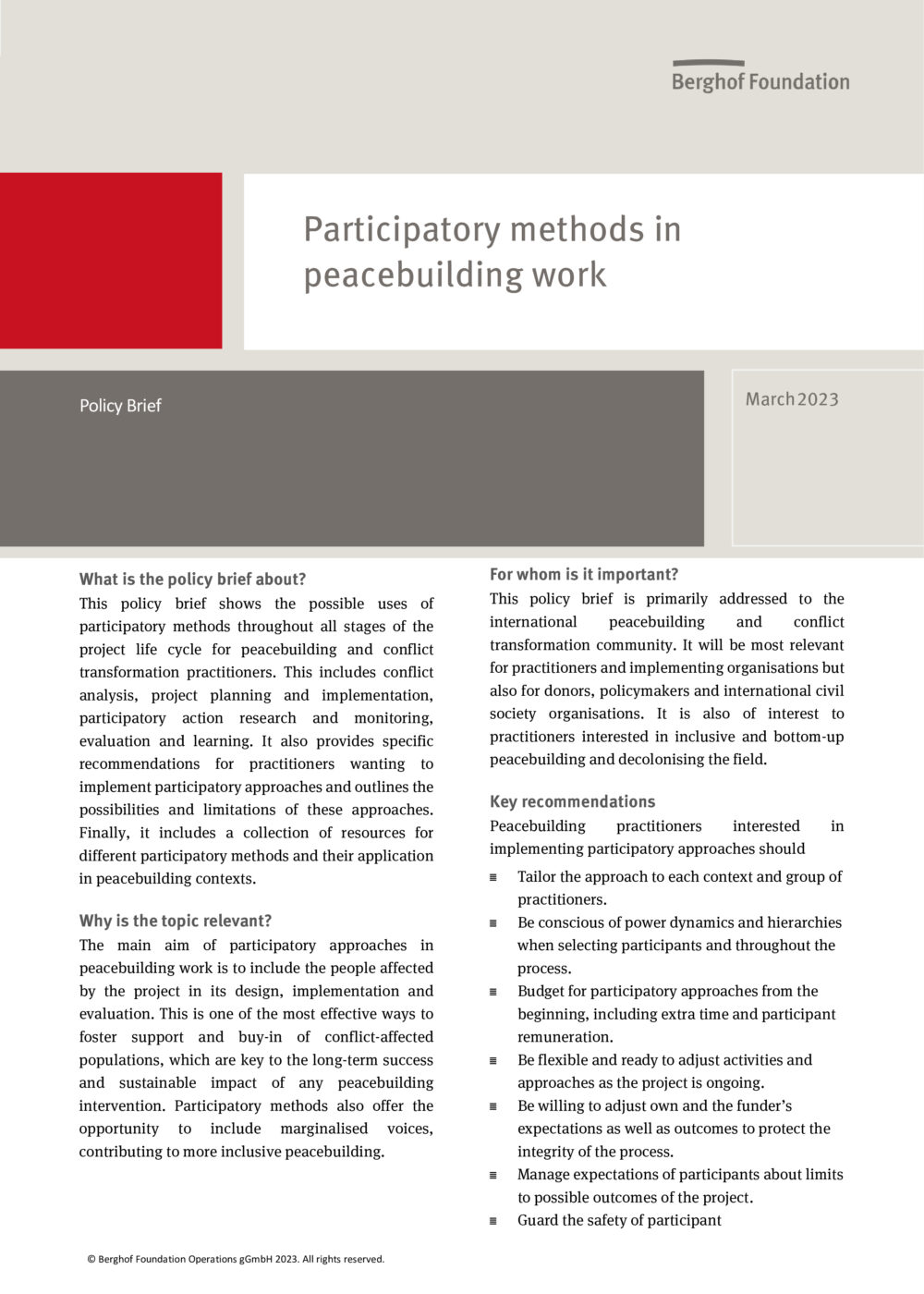
Participatory methods in peacebuilding work
This policy brief provides guidance to peacebuilders and conflict transformation practitioners on incorporating participatory methods at all stages of a project's life cycle.
- Year2023
- Author(s)Evelyn Pauls
የአገራዊ ምክክር የባለሙያዎችመመሪያ መፅሐፍ (ዋና ማጠቃለያ)
ባለፉት አስርት አመታት፣ አገራዊ ምክክሮች የአመጽ መስፋፋትን ለማሰወገድ፤ የፖለቲካ ቀውስን እና ሽግግሮችን ለመግራት እንደ ዋነኛ መሳሪያ መታየት ጀምረዋል። ምንም እንኳን በመንግስታት፣ ተቃዋሚ ፓርቲዎች፣ የሲቪል ማህበራት እና ታጣቂ ኃይሎች፤ እንዲሁም በአለም-አቀፍ ፖሊሲ፤ ሙያዊ፤ ዲፕሎማሲያዊ እና ለጋሽ ክበቦች መካከል በስፋት ውይይት የሚደረግባቸው ቢሆንም፣ የእውቅናቸውን ያህል እስካሁን ድረስ የፅንሰ-ሃሳብ ግልፅነት ይጎድላቸዋል። በተጨማሪም አገራዊ ምክክርን ከፖለቲካ አጣብቂኝ፤ ከሚከፋፍሉ የግጭት ክስተቶች እና ከምስቅልቅል የሽግግር ወቅቶች ለመሻገሪያነት እንደ አማራጭ መፍትሄ ለመጠቀም ለሚሹ አካላትም ቢሆን ጥልቅ ሙያዊ እውቀት የሚሠጡ፤ እንደ የተግባር መመሪያ እና ግብአት የሚያገለግሉ ውስን ጽሑፎች ብቻ ይገኛሉ፡፡
- Year2023
Buug-yaraha Wadahadalka Qaranka Hagaha XirfadlayaashaeNuxurka oo Kooban
Tobankii sano ee u dambeysay, Wadahalka Qaran ayaa loo arkaayay in ay yihiin aalad muhiim u ah ka hortagga kororka rabshadaha iyo maareynta qalalaasaha siyaasadda iyo kalaguurka. In kasta oo laga yaabo in si ballaaran uga hadlaan dowladaha qaran, dhinacyada mucaaradka, kooxaha bulshada rayyidka iyo dhaqdhaqaaqyada hubeysan, iyo sidoo kale siyaasadda caalamiga ah, hawl-wadeennada, kooxaha diblumaasiyiinta iyo deeq-bixiyeyaasha, caanimadooda illaa iyo maanta ma aysan barbar dhigin fikradda cad. Waxaa aad u yar khayraadka la-hayo ee hagitaan wanaagsan oo dhammaystiran iyo taageero dhab ah lagu-siin lahaa kuwa sahaminaya Wadahadal Qaran oo xal suuragel ah u noqon kara ka-gudbidda ismari-waaga siyaasadeed, xaaladaha isku-dhaca kala-qaybsanaanta keenaya, dhacdooyinka isku-dhaca kala-qaybsanaanta keenaya ama xilliyada kalaguurka ee qalalaasaha leh.
- Year2023
ማኑዋል ሃገራዊ ምይይጥ መምርሒ ንሰብ ሞያሓፈሻዊ ፅሟቕ
ኣብ ዝሓለፈ ዓሰርተ ዓመት ሃገራዊ ምይይጥ ንቲ እናወሰኸ ዝመፅእ ዘሎ ጎንፂ ንምዕጋትን ፖለቲካዊ ቅልውላው ን ስግግር መንግስትን ንምቁፅፃርን ከም ወሳኒ መሳርሒ ኮይኑ ክረአ ፀኒሑ እዩ፡፡ ዋላኳ ብመራሕቲ ሃገራት፣ ተቓወምቲ ፓርትታት፣ ጉጅለ ስቪል ማሕበረሰብን ዕጡቓትን፣ ከምኡ ድማ ብዓለም ለኸ ፖሊሲ፣ ሰብ ሞያ፣ ኣብ ዙርያ ዲፕሎማሲያውን ለገስትን ኣካላ ትን ብሰፊሑ ዝዝተዩ እንተኾኑ እዚ ተፈላጥነቶም ግና ናይ ኣምር ግልፅነት ዝጎዶሎ እዩ፡፡ ሃገራዊ ምይይጥ ልኩት ኩነት ፖለቲካ፣ መቓቓላይ ዝኾነ ትዕይንተ ጎንፂ፣ ወይ ድማ ናዕቢ ዝመለኦ እዋን ስግግር ንምሕላፍ ንዝምርምሩ ሰብ ሞያ ብዙሓት አድመዐትን መሰረታውን መምርሕታትን ተግባራዊ ሓገዛትን ዝህቡ ማተሪያ ላት ኣይርከቡን፡፡
- Year2023
Dagoomu Hasaawi Maxaafa Ogeeyyete biddisaanchoeQara xaphphishsha
Sai tonnu dirira, Dagoomu Hasaawa wiinamunni hala’litanno gibbo hoolatenna polotikunna mootimmate shiikko mitiimma tirate qara doogo assine la’nanni. Konne dagoomu hasaawa, gobboomu mootimma, hettisamaano polotiku paarte, dagoomu uurrinshubba gaamonna qodhitino bissa hattono kalqoomu polise, oegeeyye, dippiloomaatenna baraarsaanote kiwabba ledo hala’laduni amaalama dandiiturono xaa geesha hedonsa kaimu hedo ledo sumuu yaate ikkado diikkitino. Polotiku hekko, daga babbadanno gaancenna mitiinsitanno mootimmate reekko tirate dagoomu hasaawa shiqishanno mannira dandaami garinni halaalaancho biddishshanna wo’naalsha uytannoti shiima taje calla no.
- Year2023
Qajeelfama Marii Biyyaalessaa Qajeelfama Ogeessotaaf Qophaa’eCuunfaa Gabaabaa
Waggoota kurnan darban keessa, Mariin Biyyaalessaa jeequmsa siyaasaa hambisuuf akkasumas hokkaraa fi cehumsa siyaasaa qajeelchuf akka meeshaa murteessatti fudhatamaa tureera. Mariin Biyyaalessaa mootummoota, paartilee mormitootaa, gareewwan hawaasa siivilii fi qaamolee hidhatan, akkasumas imaammata idil-addunyaa, ogeeyyii, bakka bu'oota hawaasa idil-addunyaa fi arjoomtotaa keessatti bal’inaan mari’atamaa haa turuuyyuu malee, hanga har’aatti fudhatamni isaa iftoomina yaad-rimee isaa waliin wal-hinginne. Qaamolee Marii Biyyaalessaa akka tooftaa wal-dhabbiiwwan siyaasaa, haalota walitti bu’iinsa walxaxaa yookan yeroowwan burjaaja’iinsa cehumsaa bira ittiin darbuuf ifaajaniif, qajeelfama madaalawaa fi deeggarsa qabatamaa kennuuf qabeenyota bicuu qofatu jiru.
- Year2023
Agat Caddok Walal Miracsintih Kitab Abnissoh MerracsentaAmolladi amo Gacsa
Warrayteh tan tabna sanootah addat agat caddoh walalitte kookaxaw kalaloonuhuuy, siyaasa gadangadditte kee taqabitteey, tabaatabsitte lowsiisoonuh rakiibô silaac akkuk yemeetem tanbulle. Agat doolatitteey, anaakarta missoynaaniiy, sadar ayyuntih buttaati kee gaaduleh angagoyyay tonnaah, baad caddoh afkan (poliisi) abnisso, diplomaasi gitaa kee meqem abittoh exxaxi caddol baarle walal yakkem xiqqimtem takkay immay, taham fan ken fayxi mablâqidiinô lih missoowam maxiqinna. Agat caddoh walalitte gexsiisaanam, siyaasâ sittin wayaay, kuraabiytam xiqta booditte wonna hinnay, tabsi waktittek edde taboonuh xiqqimma intaamal gitah taniih, rakiibo lemerracsenta kee abnisso ginaanah, qoklaanam kaxxa doori le.
- Year2023
Violent extremism in the Western Balkans and MENA region:Key findings and implications for research
The PAVE project applied an interdisciplinary, participatory and inter-regional approach whose main objective was to advance evidence-based knowledge on violent extremism in MENA and the Western Balkans and to strengthen policy-makers’ and community leaders’ capacity in effective prevention of violent extremisms.
- Year2023
- Author(s)Maja Halilovic Pastuovic, Johanna-Maria Hülzer, Gillian Wylie
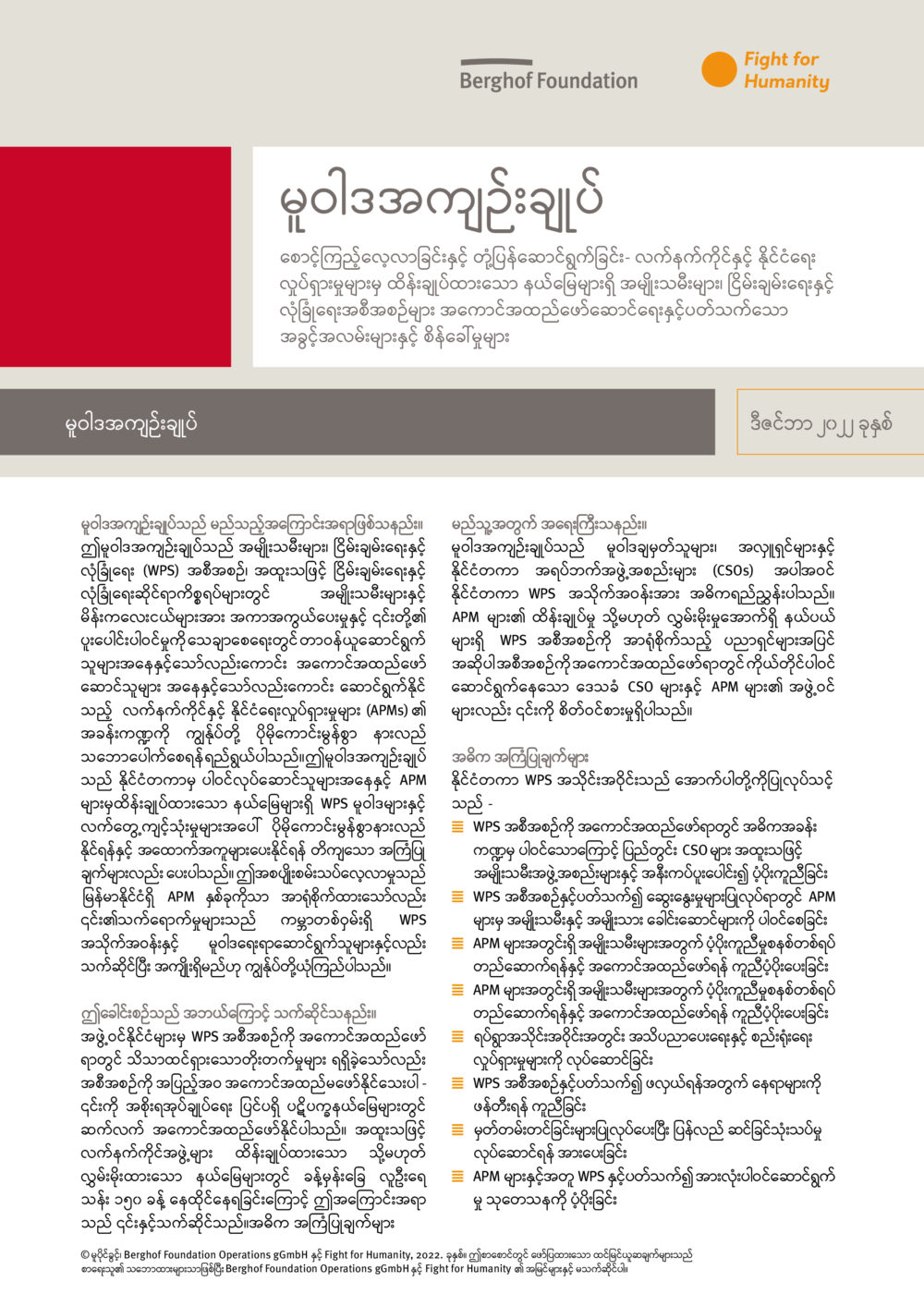
အလိုက်လေ့လာနှင့် လှုံ့ဆောင်ခြင်းပို့ဆောင်ရွက်ခြင်းမှာ အများအားဖြင့် အလွယ်တကူလည်းဖြစ်ပေသည့် အဆိုပါ အဆင့်များ နှင့် အမြဲတမ်းများအားလုံးကို ပြောင်းရန် မြင်သာလာစေရန် နှင့် ခွဲခြားခြင်းတို့ကို သေချာစွာဖြေရှင်းပေးပါသည်။ ပစ္စည်းရှိ အဆင့်များကို စောင့်ကြည့်ရန် နိုင်ငံတကာ ပြောဆိုမှု လုပ်ငန်းများကို ပြင်ဆင်ပါသည်။
ဤပိုင်းရင်းသားကိုပိုင်ဆိုးမှုအချက်အလက်ကို အလွယ်တကူလည်းကြိုးစားသည့်ပြည်သူများအတွက် ပြည်ထောင်စုအရေအတွက်နှင့်တကြောင်းတပ်မှုအချက်များအား ပါဝင်သော စစ်ကြောင်းရေးမှုများကို ဖြင့်ရှာဖွေရန်နှင့် မြန်မာနိုင်ငံတွင် ပစ္စည်းများကို ပြင်ဆင်ရန်တိုးတက်စေရန် သုံးစွဲသူများအတွက် အကြံပေးပြီးပါက အစိုးရထားသည့် ကာကွယ်တစ်ခုကို ပေးပို့ထားပါသည်။ မြန်မာ့နိုင်ငံတွင် အပြင်မှသာ ၂ ခုရှိပြီး ဤစစ်ကြောင်းရေးအရာသည် ပြင်ဆင်
- Year2022
- Author(s)Ann-Kristin Sjöberg, Véronique Dudouet, Tilman Papesch, Katharina Schmitz
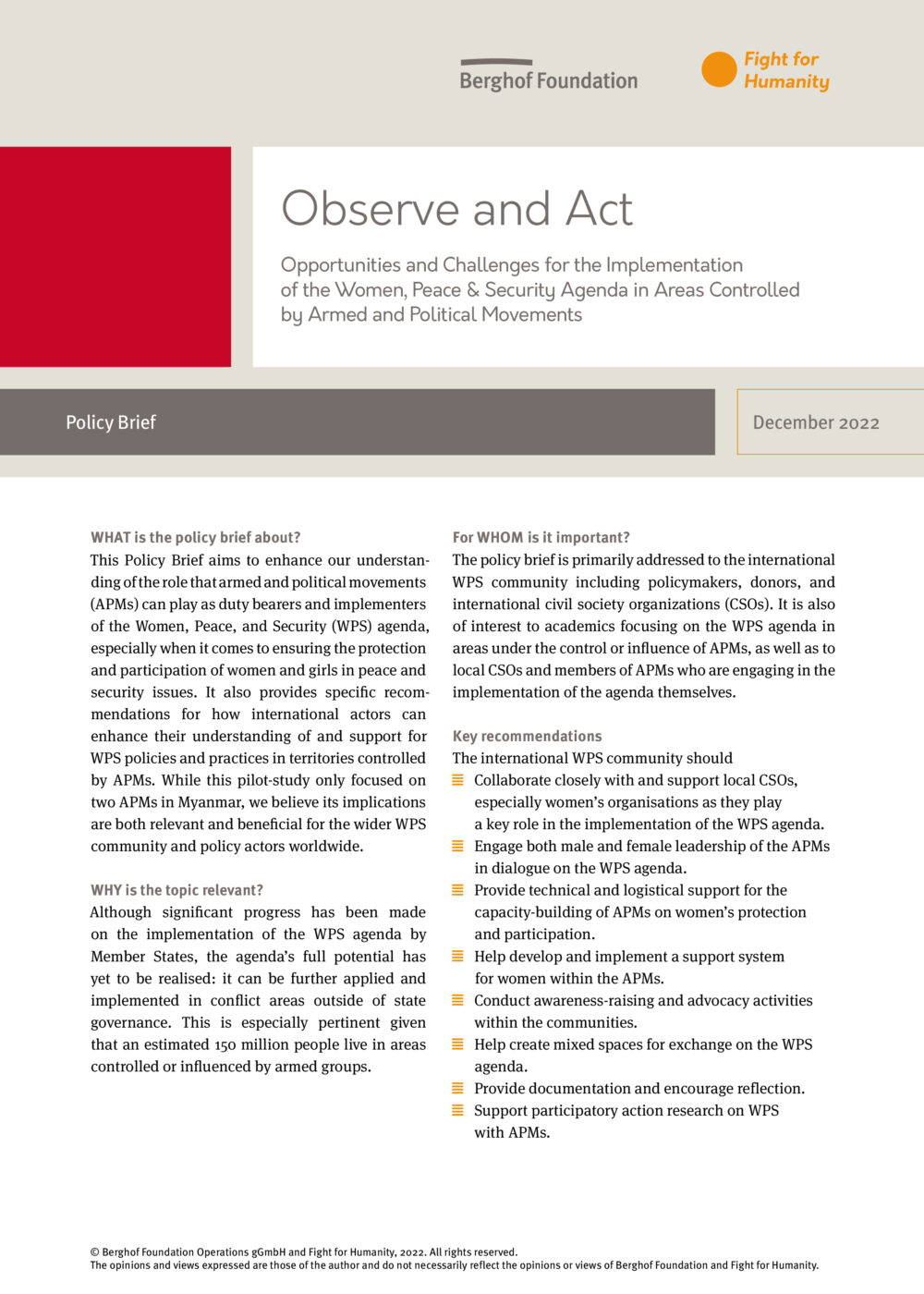
Observe and ActOpportunities and challenges for the implementation of the Women, Peace & Security agenda in areas controlled by armed and political movements
This policy brief enhances our understanding of the role that armed and political movements can play as implementers of the women, peace and security agenda, especially when it comes to ensuring the protection and participation of women and girls in peace and security issues. It offers specific recommendations for international actors on how they can enhance their support for WPS policies and practices in territories controlled by armed and political movements. While this pilot-study only focused on two movements in Myanmar, its implications are relevant for the wider WPS community and policy actors worldwide.
- Year2022
- Author(s)Ann-Kristin Sjöberg, Véronique Dudouet, Tilman Papesch, Katharina Schmitz