BLOG POST | 19 Jun 2026
From trauma to trust
Integrating mental health and psychosocial support into peacebuilding
Ahead of UN Peacebuilding Week, our MHPSS Advisor Stefanie Gaumert explores why mental health and psychosocial support are essential for building peace.
By Stefanie Gaumert
As the international community gathers for UN Peacebuilding Week in New York, there is growing recognition that sustainable peace is not only political and institutional, but also deeply psychosocial.
Armed conflict, displacement and violence leave profound psychological impacts on individuals and communities, shaping how people perceive threats, build trust and engage with others. Yet mental health and psychosocial support (MHPSS) has long remained peripheral to peacebuilding efforts, treated primarily as a humanitarian or health concern rather than as a core component of conflict transformation. This is beginning to change.
The role of stress and trauma in conflict
Experiences of violence and human rights violations, often compounded by the deprivation of basic needs, generate high levels of individual and collective stress in conflict-affected societies. Elevated stress and unprocessed trauma are associated with heightened threat perception, increased emotional reactivity and a reduced capacity for reflection, self-regulation and perspective-taking. Survivors of violence may lose trust in others and in the possibility of human connection, affecting not only how safe people feel, but also their ability to engage constructively and participate meaningfully in dialogue.
These dynamics can significantly undermine communication, trust-building, and efforts towards constructive conflict transformation. This is why trauma-informed approaches should be integrated throughout all stages of dialogue and mediation, from process design and facilitation to agenda-setting and implementation.
From trauma awareness to peace practice
In practice, trauma-informed dialogue means designing safer, more supportive spaces in which participants feel respected, heard and able to engage meaningfully. It requires adapting facilitation methods to account for emotional distress, actively minimising re-traumatisation, and ensuring that appropriate referral pathways are in place. It also requires recognising that dialogue is not simply an exchange of political positions, but it is often an encounter between people carrying experiences of loss, fear, and violence.
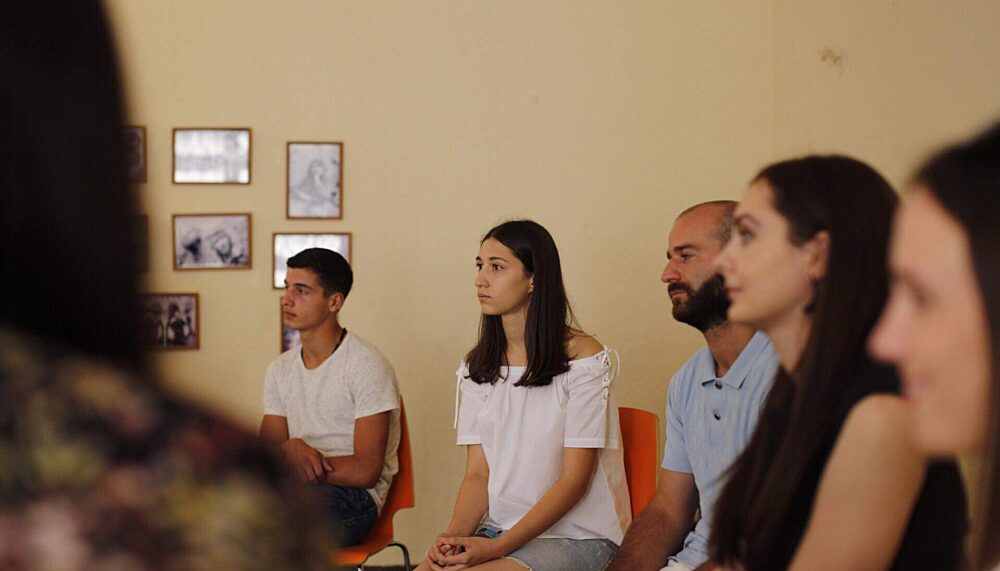
One example is the history dialogue process between Georgians and Abkhazians facilitated by the Berghof Foundation. Through biographical dialogue workshops, participants from both communities shared personal memories of war in a carefully facilitated environment that prioritised listening, acknowledgement and emotional safety, helping them recognise each other’s losses and fostering empathy across deeply entrenched divides.
At the same time, supporting the well-being of mediators and facilitators is important. They often work in high-stress environments that place them at significant risk of burnout, compassion fatigue, and secondary trauma, yet their wellbeing is rarely prioritised. Strengthening self-awareness, emotional regulation, stress management and peer support mechanisms is therefore not only essential practitioners themselves, but a critical investment in effective and sustainable peace practice.
Advancing global dialogue on MHPSS and peacebuilding
This year’s UN Peacebuilding Week offers an important opportunity to deepen this conversation. We will join partners including the Netherlands Ministry of Foreign Affairs, Nonviolent Peaceforce, the United Nations Peacebuilding Support Office, the World Health Organization, the International Organization for Migration, UNICEF, and the Global Community Engagement and Resilience Fund to explore the role of MHPSS in peacebuilding and prevention. We hope this year’s discussions will help move MHPSS beyond a narrow focus on individual recovery towards more comprehensive forms of trauma-informed peacebuilding that address the relational and collective dimensions of conflict and healing. Bringing together such diverse actors also creates an opportunity to take stock of the breadth of knowledge, experience, and innovation already emerging in this field.
As peacebuilding actors face increasingly complex crises, integrating psychosocial perspectives is no longer optional, it is essential. Sustainable peace requires more than negotiated settlements or institutional reforms. It requires recognising the human dimensions of conflict and creating processes that support dignity, participation, and resilience.
Media contact
You can reach the press team at:
+49 (0) 177 7052758
email hidden; JavaScript is required