BLOG POST | 22 Jul 2026
How women build peace in Somalia, and what we can learn from their experiences
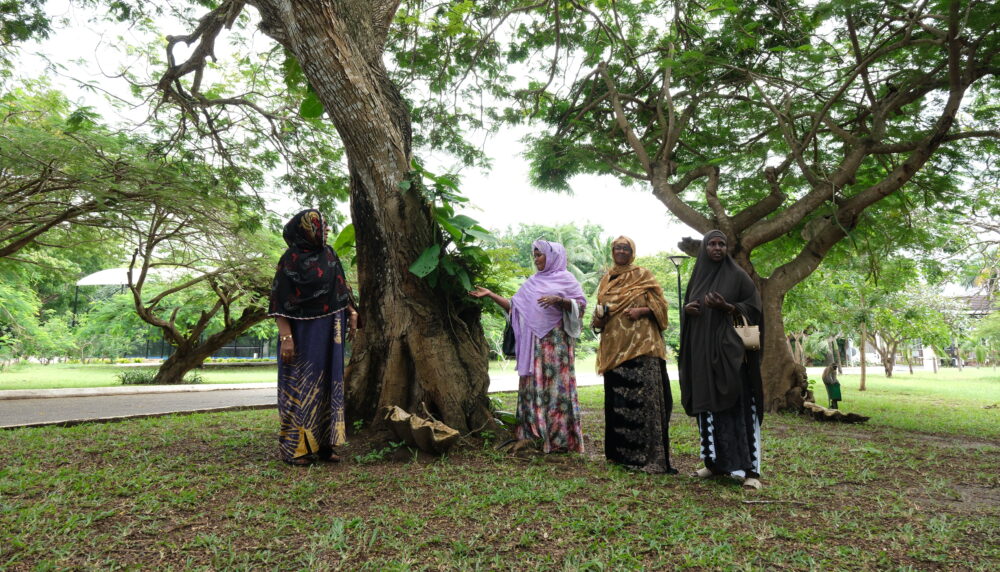
We must learn from women leaders on the ground who overcome gendered resistance to normalise peace.
By Zainab Mohamed
Women, Peace and Security remains more relevant than ever. Despite years of advocacy, women are still too often seen only as victims rather than resolvers of conflict or leaders of peace.
Somalia, a country marked by a long history of violence, patriarchal norms, and deep-rooted systems of exclusion, might at first glance appear to reflect this. Yet my experience shows something different: women are actively creating spaces for dialogue and reconciliation across every level of society.
In an era of increasingly complex and fragmented conflict, this cannot be ignored. As negotiations become more transactional and disconnected from the realities on the ground, women’s inclusion is not just a moral imperative – it is a practical necessity for building sustainable peace from the ground up.
I’ve had the unique opportunity to support and learn from the Insider Peacebuilders Network (IPN), a grassroots network of Somali peace actors committed to dialogue and reconciliation. The IPN members are encouraging meaningful dialogues among conflict parties. In this work, I’ve witnessed the strength, strategic brilliance, and courage of Somali women who are not merely surviving conflict but actively reshaping their communities in its wake.
I’ve witnessed the strength, strategic brilliance, and courage of Somali women who are not merely surviving conflict but actively reshaping their communities in its wake.
This is a story of leadership that defies long-held assumptions about a woman’s place in a patriarchal society in which clans are often in conflict with one another. Having grown up in an environment shaped by mistrust and division, I’ve seen how women’s informal leadership complements other efforts – quietly weaving reconciliation, healing, and hope into the daily lives of communities.
Leadership that enables this kind of local change can take many forms. Sometimes, it begins with the bold vision of a young woman determined to unify where others see only division. In Balad district, one young woman proposed a football tournament to bring together four neighbourhoods that had not interacted for years – some with a history of violent clashes. Her idea for a “Peace Cup” was immediately dismissed and deemed impossible. But she did not back down. Her argument was simple: peace must start somewhere – and it can begin with connection. Her vision prevailed. The tournament brought together youth and local musicians in an event that transformed suspicion into celebration. A simple idea, yes – but one that normalised peace in a context where division had long been the norm.
At other times, women lead through the patient, principled work of mediation – drawing from shared identity and long-standing social bonds to resolve conflict. In Beledweyne, a woman from the IPN brought together members of a local women’s association to address a land dispute between two communities at one time known as walalo (brothers and sisters). Their relationship, once rooted in trust, had been poisoned by external forces, turning shared land into contested territory. The mediator led 40 women in a symbolic peace march, waving white flags and carrying a hand-painted cloth bearing the words: “Reconcile! Preserve land and children!” In the face of dismissal and gendered resistance, she persisted – grounded in neutrality, authenticity, and moral clarity. Her efforts paid off. The communities found resolution, and with it, a return to shared identity and cooperation.
In the most critical moments, this resilience becomes a fierce, protective force – one that defies even the logic of revenge. In another incident in Beledweyne, an elder woman saved a kidnapped member of the IPN by claiming him as her own son. Facing his captors, she declared: ‘If you kill him, consider me dead as well’. She emphasised that killing him for revenge would only bring more chaos. She successfully put an end to a cycle of violence that would have continued spiralling without her intervention.
Many people believe that a successful peace deal is a transactional agreement achieved through high-level diplomacy. However, grassroots change at the local level must not be overlooked when the goal is sustainable, long-term peace.
Many people believe that a successful peace deal is a transactional agreement achieved through high-level diplomacy. However, grassroots change at the local level must not be overlooked when the goal is sustainable, long-term peace. From football pitches to peace marches, mediation tables to acts of maternal defiance, Somali women are not waiting for permission to lead. They are already doing the work, weaving the social fabric back together, thread by resilient thread and demonstrating that peace is not only negotiated at the official table but built every day in communities. These women – young visionaries, patient mediators, protective elders – represent a seamless, intergenerational strategy for peace from the ground up. Their stories are not anecdotal – they are foundational.
The story of these Somali women are not exceptions – they are just some of many examples. In a world still marked by conflict, we must reaffirm our commitment to women peacebuilders engaged in the crucial work of building peace in their communities – listen to their priorities, fund their work directly, and above all, trust in their leadership as essential to building lasting peace.
Zainab Mohamed works at the intersection of conflict resolution and climate change. As a Project Manager working with Berghof Foundation, she supports local peacebuilders in Somalia to turn dialogue into action. Her journey – from growing up in conflict to helping others find peace – reflects her belief that hope, when shared, can rebuild entire communities.
Media contact
You can reach the press team at:
+49 (0) 177 7052758
email hidden; JavaScript is required