Our Library
Explore our publications, from research papers and series to educational materials, covering all aspects of conflict transformation and peace promotion.
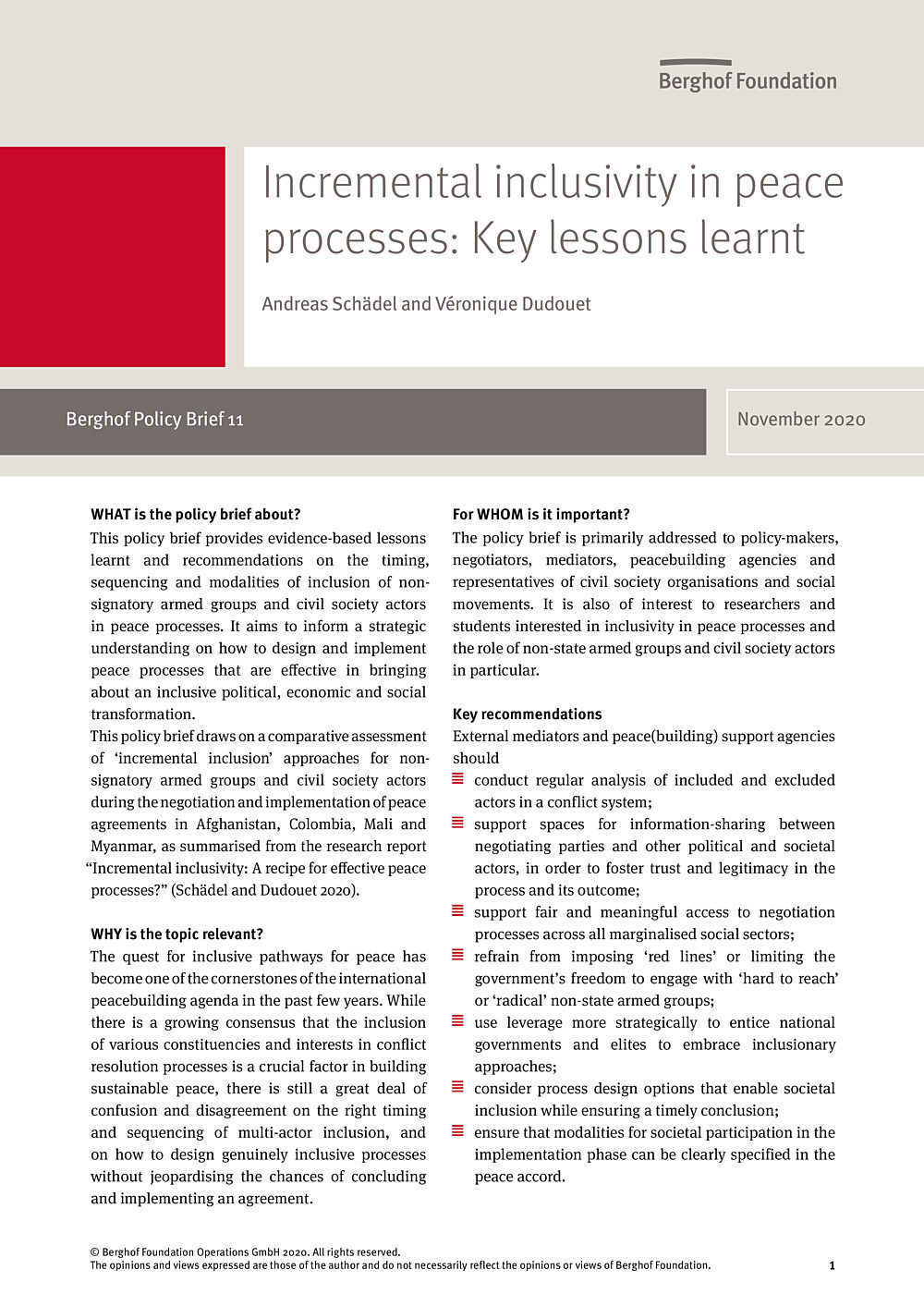
Incremental inclusivity in peace processes: Key lessons learntBerghof Policy Brief 11
This policy brief provides evidence-based lessons learnt and recommendations on the timing, sequencing and modalities of inclusion of nonsignatory armed groups and civil society actors in peace processes. It aims to inform a strategic understanding on how to design and implement peace processes that are effective in bringing about an inclusive political, economic and social transformation.
- Year2020
- Author(s)Andreas Schädel, Véronique Dudouet
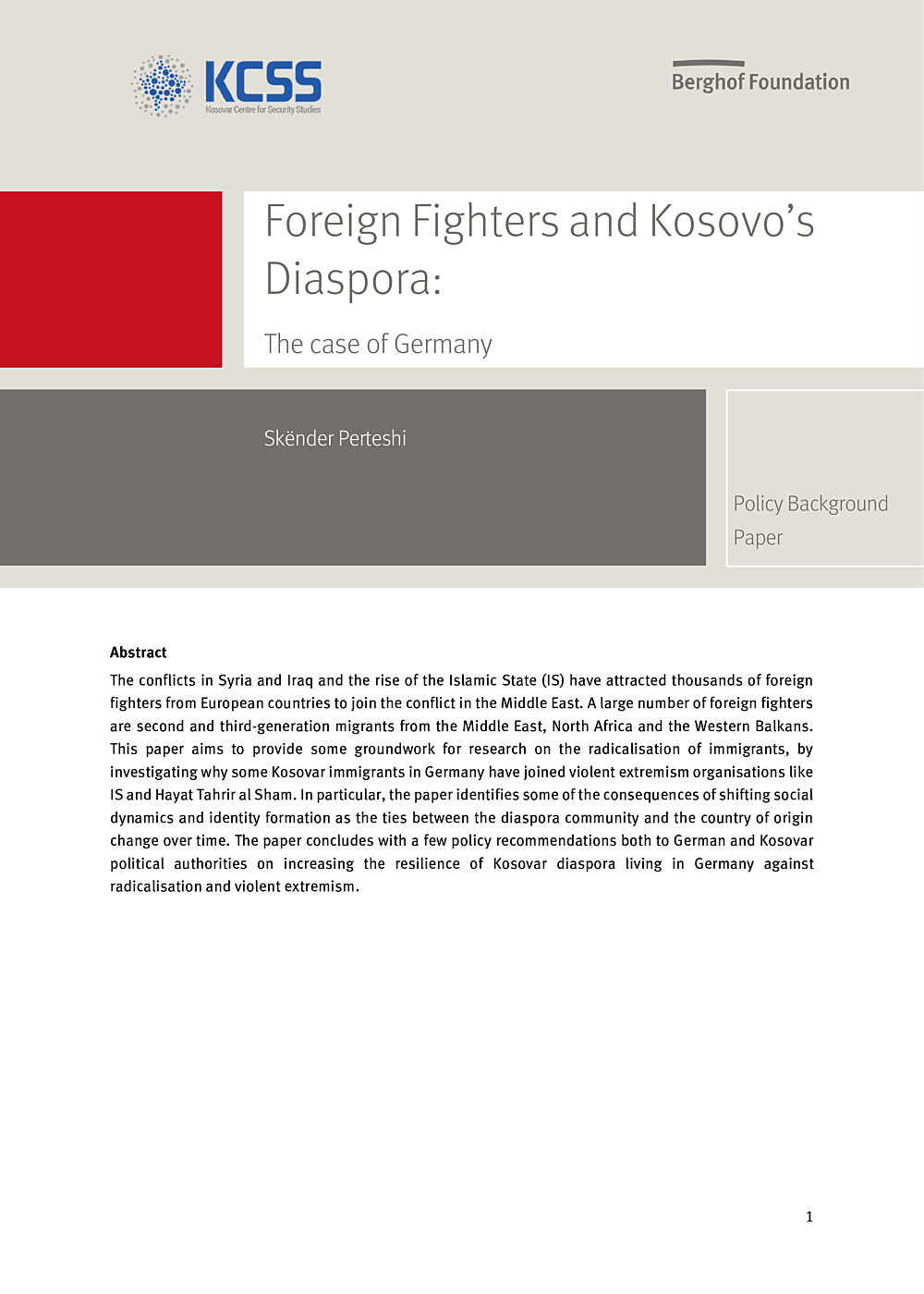
Foreign Fighters and Kosovo’s DiasporaThe case of Germany
The conflicts in Syria and Iraq and the rise of the Islamic State (IS) have attracted thousands of foreign fighters from European countries to join the conflict in the Middle East. A large number of foreign fighters are second and third-generation migrants from the Middle East, North Africa and the Western Balkans. This paper aims to provide some groundwork for research on the radicalisation of immigrants, by investigating why some Kosovar immigrants in Germany have joined violent extremism organisations like IS and Hayat Tahrir al Sham. In particular, the paper identifies some of the consequences of shifting social dynamics and identity formation as the ties between the diaspora community and the country of origin change over time. The paper concludes with a few policy recommendations both to German and Kosovar political authorities on increasing the resilience of Kosovar diaspora living in Germany against radicalisation and violent extremism.
- Year2020
- Author(s)Skënder Perteshi
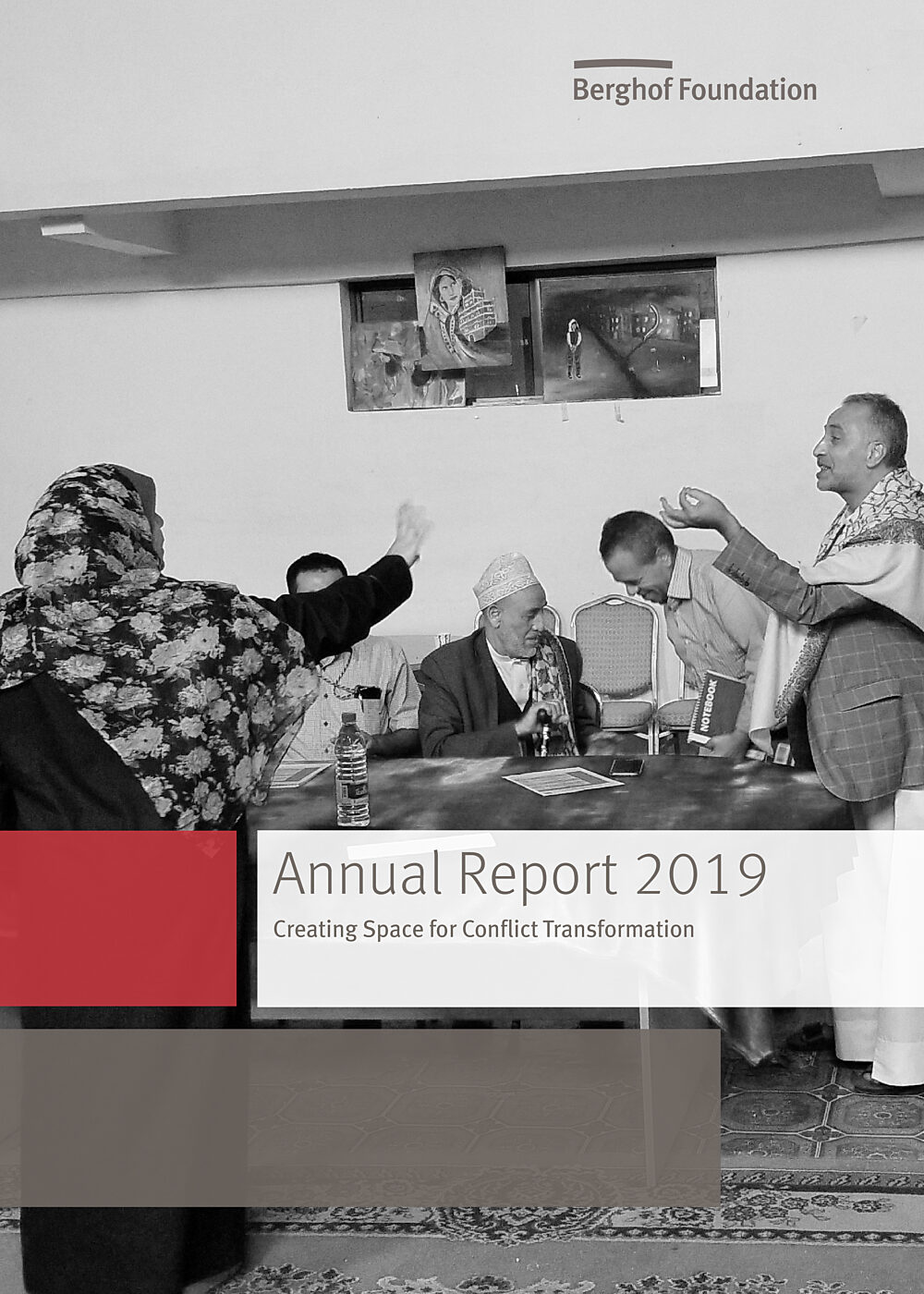
Berghof Foundation Annual Report 2019
In this review of 2019, we want to present a concise picture of our work, using one example from each region to highlight the wide variety of approaches we take to try to transform conflict.
- Year2020
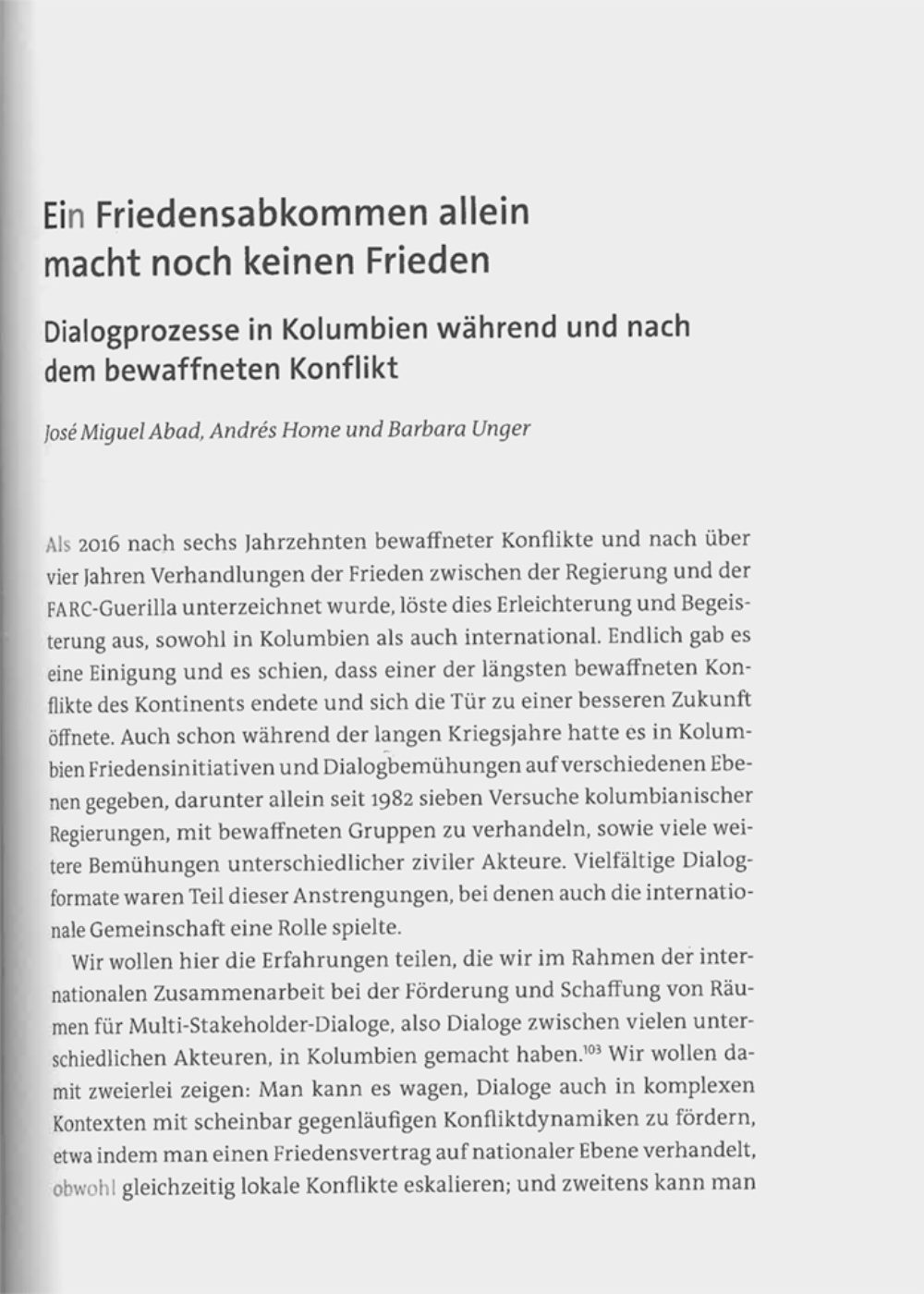
Ein Friedensabkommen allein macht noch keinen FriedenDialogprozesse in Kolumbien während und nach dem bewaffneten Konflikt
Wir wollen hier die Erfahrungen teilen, die wir in Rahmen der internationalen Zusammenarbeit bei der Förderung und Schaffung von Räumen für Multi-Stakeholder-Dialoge, also Dialoge zwischen vielen unterschiedlichen Akteuren, in Kolumbien gemacht haben. Aus dem Buch: Mehr Dialog Wagen! Eine Ermutigung für Politik, gesellschaftliche Verständigung und internationale Friedensarbeit.
- Year2020
- Author(s)José Miguel Abad, Andrés Home, Barbara Unger
Critical substantive issues at the nexus of peacemaking and constitution-building
Mediation and constitutional processes are tasked with transforming the root causes of protracted societal conflicts, as well as redressing abuses of power and human suffering caused by conflict. This paper examines the most critical substantive or thematic issues which lie at the heart of both peacemaking and constitution-building endeavours: inclusive political governance; territory and power; security sector reform and governance; and transitional justice. The report then concludes by proposing a number of approaches and strategies to address some of these challenges, based on lessons learnt from past experiences and expert interviews.
- Year2020
- Author(s)Véronique Dudouet, Sara Abbas, Charlotte Huch
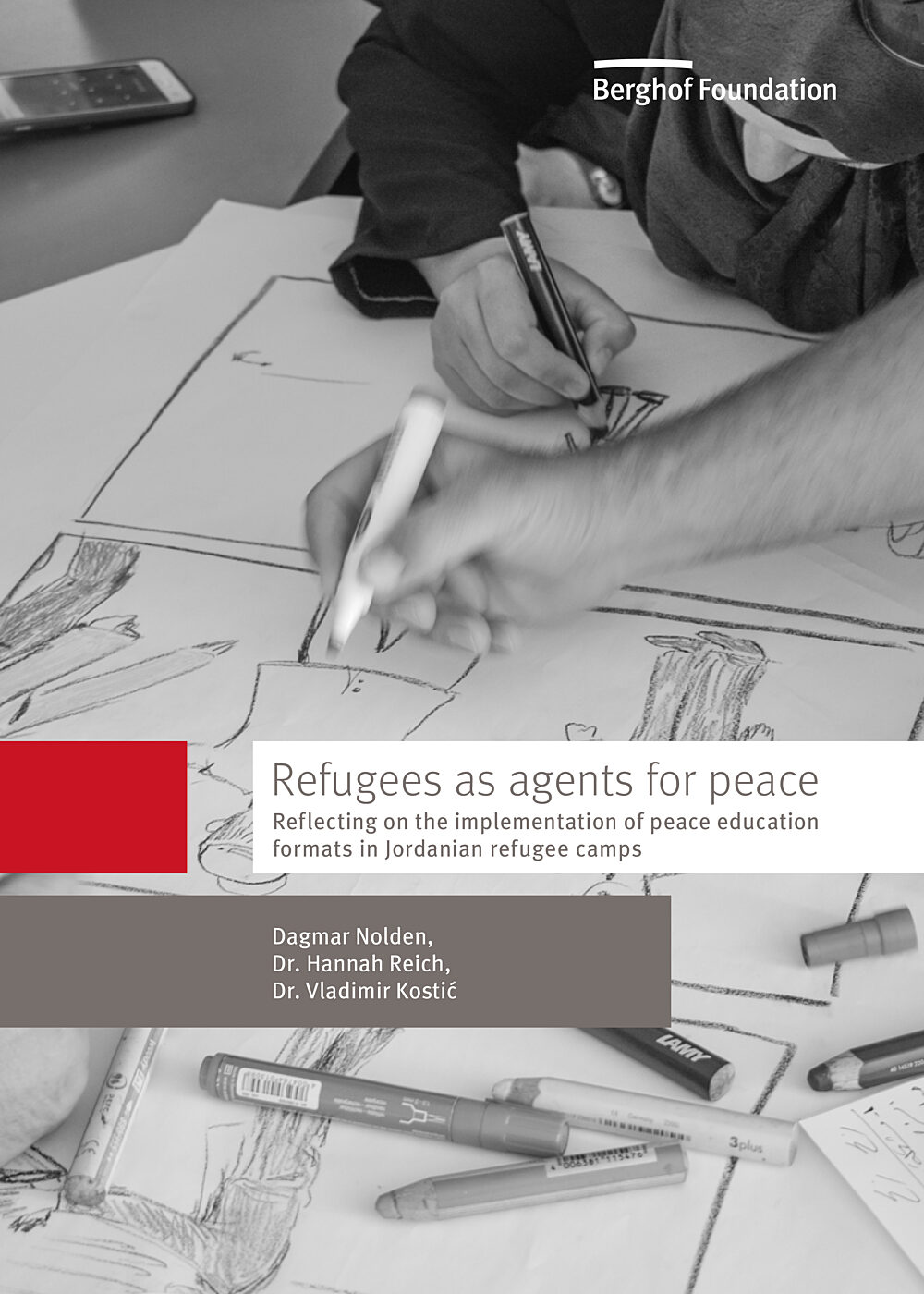
Refugees as agents for peaceReflecting on the implementation of peace education formats in Jordanian refugee camps
This publication aims at outlining and reflecting on the principles that guided the implementation of project activities based on the information and data generated through monitoring and evaluation. It focuses primarily on the format of the qualification courses on “Building Peace from the Inside Out.”
- Year2020
- Author(s)Dagmar Nolden, Hannah Reich, Vladimir Kostić
Citizenship and nonviolent education in JordanCurriculum and manual for universities
Which are the basic ideas behind this curriculum and manual? Linking citizenship to personal identity and the ability to find orientation in the globalized world is very important. We are convinced, that educational concepts such as citizenship education, global learning and nonviolent education can make a huge contribution to this. Which are the essential elements of these important concepts?
- Year2020
I Have To Speak (नेपाली भाषा)Voices of Female Ex-Combatants from Aceh, Burundi, Mindanao and Nepal
[सार मेसिन अनुवाद गरिएको]
यस पुस्तिकाले द्वन्द्वमा रहेका केही लुकेका र बिर्सेका आवाजहरूलाई विस्तार गर्न खोज्दछ। विविध राजनीतिक, धार्मिक, जातीय र राष्ट्रिय पृष्ठभूमिका महिला पूर्व लडाकूहरूका यी कथाहरूले महिला र उनीहरूको सशस्त्र द्वन्द्वको अनुभवलाई दिगो शान्तिको लागि गम्भीरताका साथ लिनुपर्दछ भनेर देखाउँदछ।
- Year2020
- Author(s)Evelyn Pauls, Tripani Baijali, Alabai Buisan Mikunug, Gypsy Queen Buisan Sumampao, Grace Nitunga, Lila Sharma, Salawati S.Pd
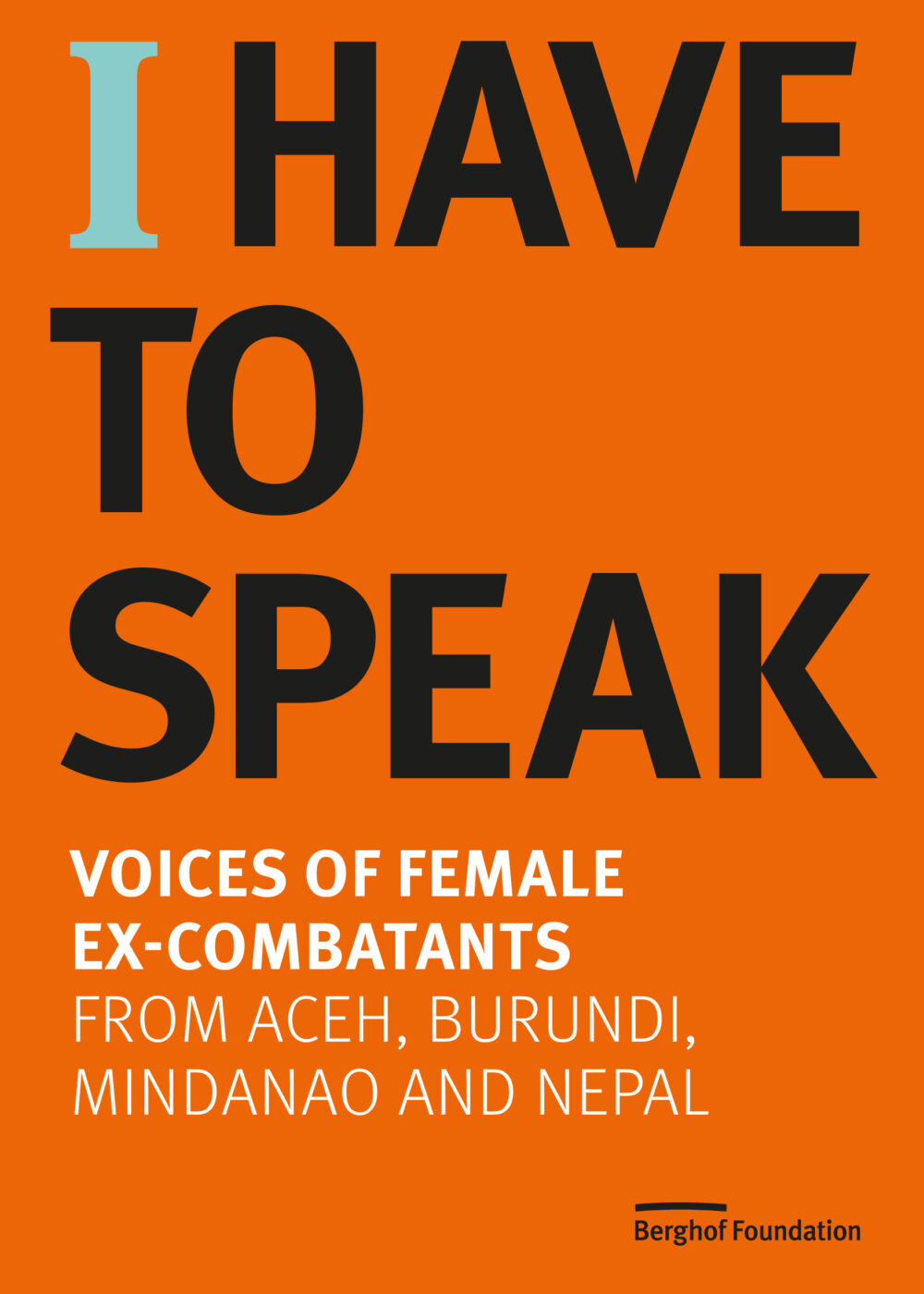
I Have To SpeakVoices of Female Ex-Combatants from Aceh, Burundi, Mindanao and Nepal
This booklet seeks to amplify some of the hidden and forgotten voices in conflict. These stories of female ex-combatants from diverse political, religious, ethnic and national backgrounds show that women and their experiences of armed conflict have to be taken seriously for building sustainable peace.
- Year2020
- Author(s)Evelyn Pauls, Tripani Baijali, Alabai Buisan Mikunug, Gypsy Queen Buisan Sumampao, Grace Nitunga, Lila Sharma, Salawati S.Pd
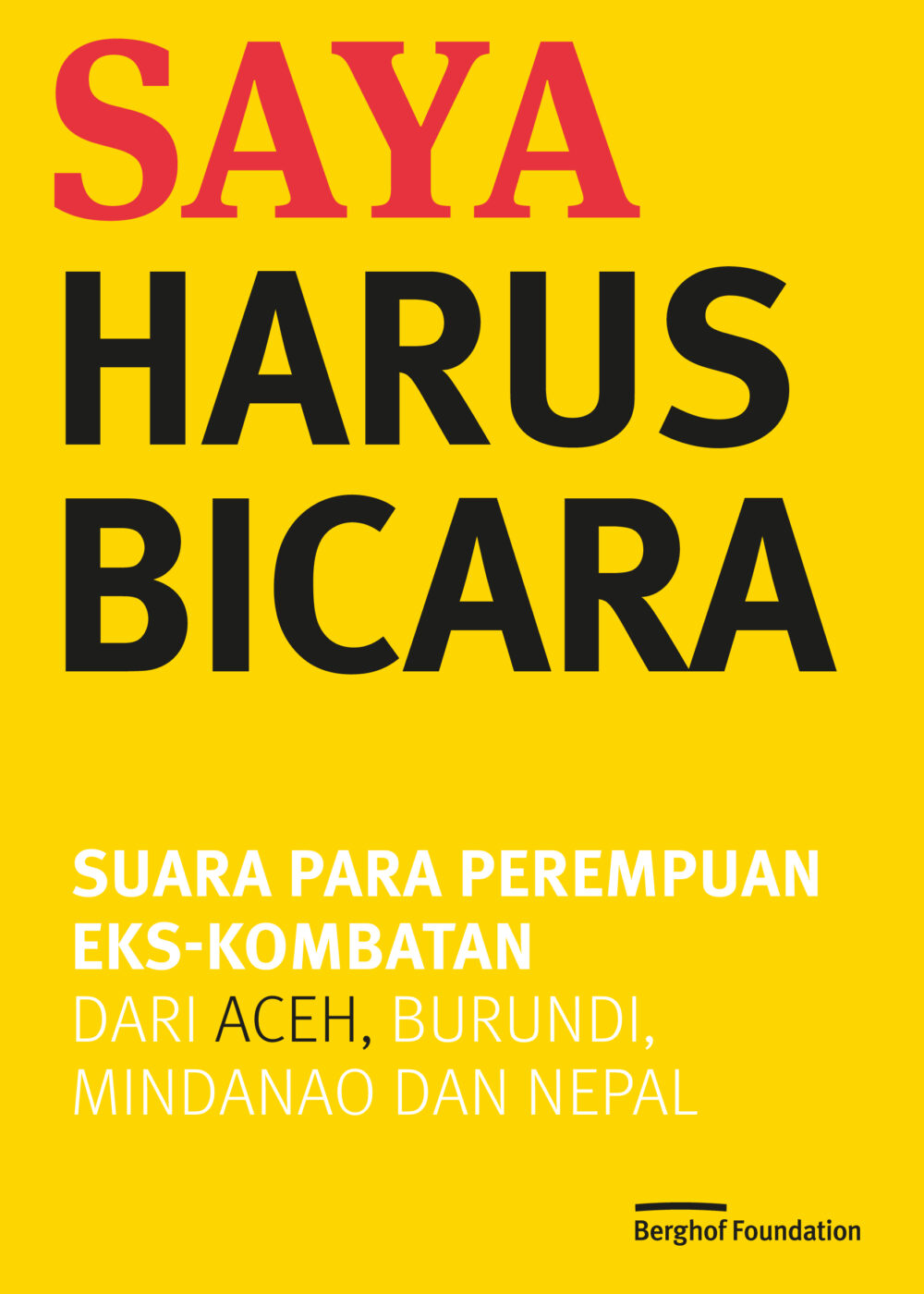
Saya Harus BicaraSuara Para Perempuan Eks-kombatan dari Aceh, Burundi, Mindanao dan Nepal
Buku ini bertujuan untuk menguatkan suara dari kisah-kisah yang tersembunyi dan terlupakan dalam konflik. Kisah-kisah dari para perempuan eks-kombatan dari beragam latar belakang politik, agama, etnis dan bangsa ini menunjukkan bahwa perempuan dan pengalaman mereka dalam konflik bersenjata harus disimak dengan serius jika hendak membangun perdamaian yang berkelanjutan.
- Year2020
- Author(s)Evelyn Pauls, Tripani Baijali, Alabai Buisan Mikunug, Gypsy Queen Buisan Sumampao, Grace Nitunga, Lila Sharma, Salawati S.Pd