Search Results
Results for 'the power of we'
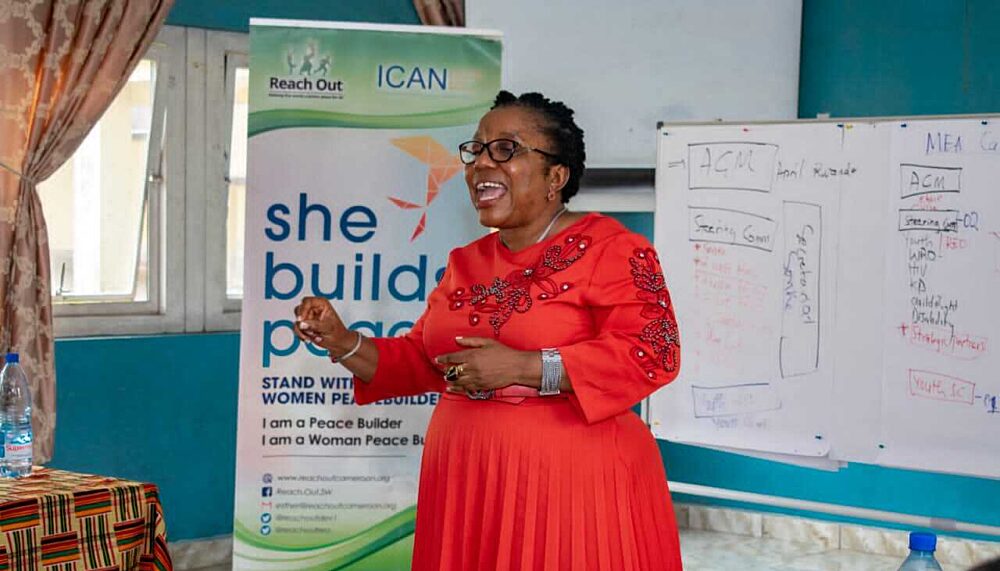
The crucial role of women mediators in war-torn Cameroon, and the risks they takeGerman Africa Prize 2023 awarded to the "1st National Women’s Convention for Peace in Cameroon"
In Cameroon, women mediators manage to broker deals amidst rampant violent conflicts. Our colleague Carla Schraml interviewed a group of them for her latest study.
- blog post 30 Nov 2023
- Author(s) Carla Schraml
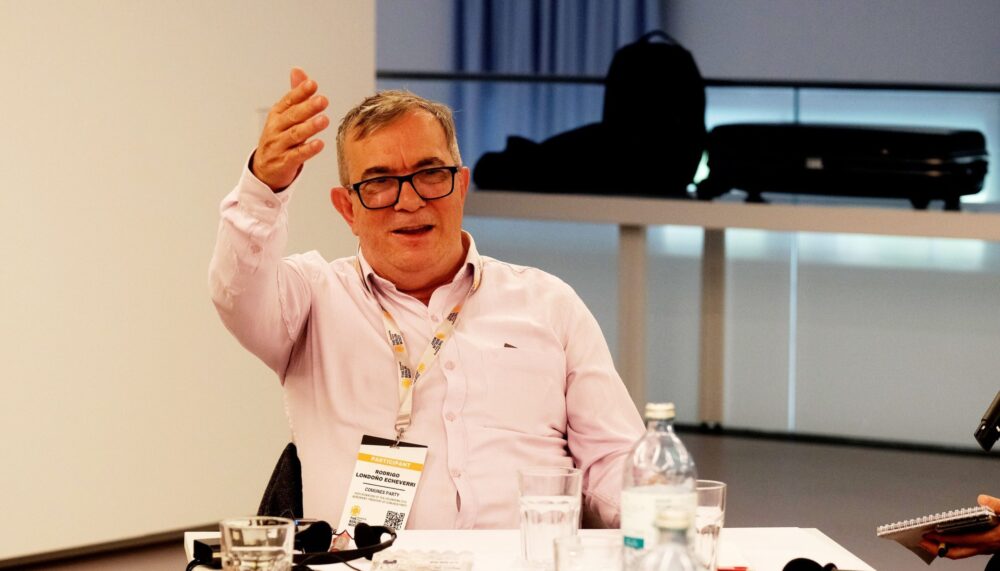
“Our agreement laid the groundwork for lasting peace”Interview with Colombian politician Rodrigo Londoño Echeverri at The Berlin Moot
Rodrigo Londoño Echeverri, Colombian politician and last commander of the FARC, spoke with us at The Berlin Moot about his experiences and peace in the country.
- feature 27 Sept 2024
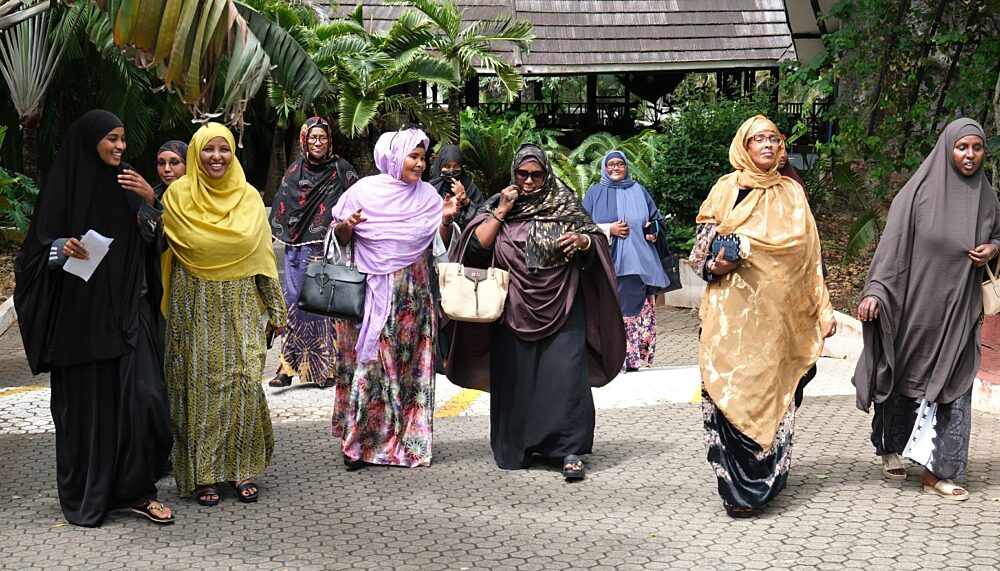
International Day of Peace 2025: Listen to the stories of women peacebuilders
On Peace Day, we spotlight Somali women peacebuilders shaping resilient futures through collective action. Watch their powerful stories.
- feature 18 Sept 2025
The Berghof Approach
Conflict is inevitable, but violence is not. With support, people can transform violent conflicts into sustainable peace.
The Road to Peace in IrelandTransitions Series No. 6
The history of resistance to English/British interference in Ireland over eight centuries has gone through many different phases: passive resistance, agrarian unrest, armed uprising, setbacks, defeats and regroupings, temporary victories, mass movements and political agitation, language and cultural struggles, democratic gains, and constitutional and parliamentary engagement. The last is often the most challenging phase to any revolutionary movement.
- Year 2008
- Author(s) Bairbre de Brún
Working on the Psychosocial Gap: Challenges, Hopes, PerspectivesBerghof Handbook Dialogue Series No. 11 - comment
In his scholarly article, “Dealing with painful memories and violent pasts”, Brandon Hamber explains and reflects on “the relationship between how individual (largely victim) processes of coming to terms with mass atrocity (a micro perspective) relate to the collective or political process of finding ways of dealing with the past (a macro perspective)” (Hamber 2015, 2). In any discussion of war, mass atrocities, political repression and their impact, one is unavoidably forced to think about this relationship and deal with it – to confront the challenge of having to talk about both perspectives without being able to fully integrate them or grasp their linkage in all its complexity. Hamber does a masterful job in confronting this inherent problem but inevitably succumbs, at least in part, to the impossibility of the task. The reason for this might be what I call “the psychosocial gap”, and I believe this needs closer examination.
- Year 2015
- Author(s) David Becker
Dialogue with Salafi jihadi armed groupsChallenges and opportunities for conflict de-escalation
In some of the most intense ongoing armed conflicts (Syria, Iraq, Afghanistan, Somalia and Nigeria, to name a few), violent state challengers are characterised by their radical religious beliefs rooted in Salafi-based Islamism.
To better understand possible pathways to violence de-escalation or conflict transformation in such contexts, one needs to analyse the behavioural, ideological and organisational patterns of Salafi jihadi armed groups (SJAGs).
- Year 2019
- Author(s) Karin Göldner-Ebenthal, Véronique Dudouet, Marie Migeon
Conflict resolution with Salafi-jihadi groups
The research project examined (de-)escalation trajectories of Salafi-jihadi armed groups and explored options and challenges for conflict resolution.
- Past Project 2017 - 2019
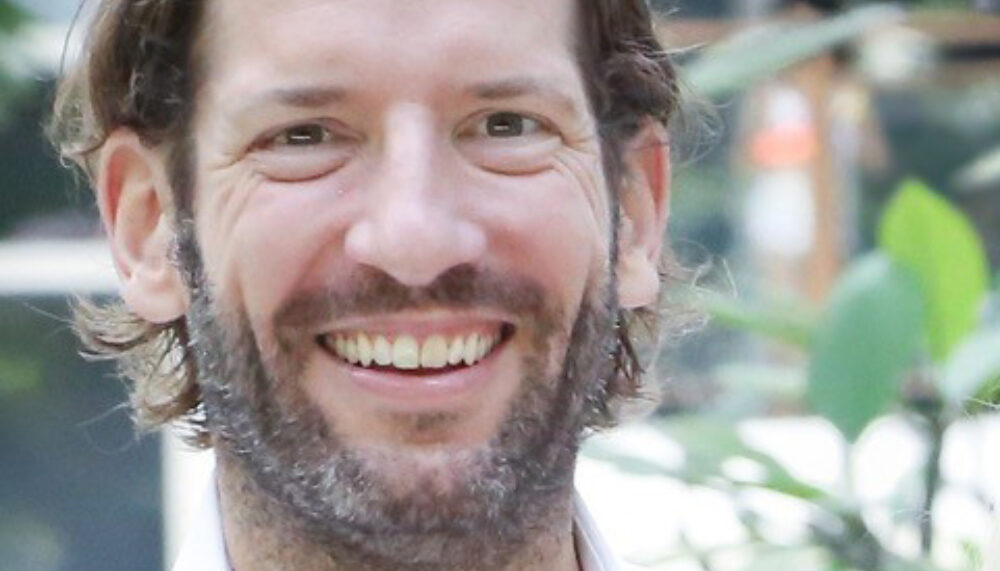
"Peace really must be for everyone, everywhere and anytime"A chat with Mathias Terheggen, CEO, expert on philanthropy and board member of the Berghof Foundation
Mathias Terheggen, our new board member, answers questions about his career and why he works towards positive change and peace.
- feature 8 Oct 2020
Germany’s day of destiny: 9 November1989 – 1938 – 1918
9 November is widely regarded as a kind of “day of destiny” for the Germans.
- blog post 7 Nov 2019
- Author(s) Hans-Joachim Giessmann