BLOG POST | 18 Mar 2026
Political integration still matters
How mediators can support armed groups’ transition to peace
In this blog, the authors offer mediators guidance to help armed groups shift from violence to peaceful participation, drawing insights from their latest report.
By Véronique Dudouet, Johanna-Maria Hülzer, Gyda Sindre, Mimmi Söderberg Kovacs
Across the world, we see that conflicts are becoming more fragmented, more internationalised, and more difficult to resolve. Peace agreements are fewer, armed actors are more diverse, and geopolitical rivalries increasingly shape local wars. As the era of what is often called “liberal peacebuilding” fades, mediators and peace practitioners must adapt their approaches. This raises a central question: how can non-state armed groups still be persuaded to demilitarise and pursue their goals through peaceful means?

Based on the combined expertise of the Berghof Foundation, Folke Bernadotte Academy and the Politics After War scholarly network, our new practitioner report offers guidance on how to support the transition of armed groups from armed struggle to political participation in today’s changing conflict landscape.
Political integration as a proven pathway
The political integration of non-state armed groups is a well-established tool in peace processes. This may involve them transforming their armed structures into political parties, participating in elections, joining local government or engaging in civil society organisations and social movements. The core principle is simple: offering credible political alternatives to violence.
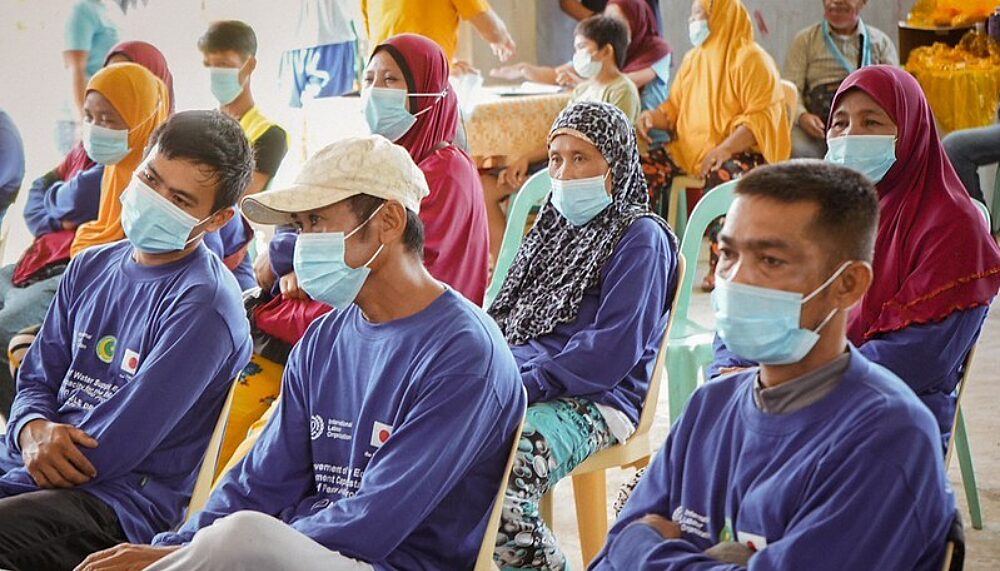
This approach is grounded in decades of experience, and we have seen it work in different countries: from Colombia to Mozambique and the Philippines, armed groups have successfully transitioned into political actors, contributing to shaping their countries’ future through peaceful means.
Research shows that the political integration of armed groups has a positive impact on the country’s peace and stability, precisely because it helps address one of the root causes of many conflicts: exclusion from political power. By creating pathways for participation and representation, inclusion can reduce the risk of violence flaring up again.
A decline in negotiated peace agreements
A defining feature of today’s conflict landscape is the sharp decline in negotiated peace agreements. Compared to the 1990s and early 2000s, far fewer conflicts now end through political settlements. Ceasefires are often temporary, negotiations are fragmented or informal, and peacemaking efforts increasingly rely on transactional approaches that favour interests over norms, and short-term gains over long-term outcomes.
This trend complicates efforts to support the political integration of armed groups. Where peace agreements once provided a clear framework for demobilisation, political participation and security guarantees, such pathways are now increasingly absent. Armed groups are often expected to transform without clear sequencing or long-term international guarantees.
The report shows that political integration is therefore less likely to unfold as a linear, post-agreement process. Instead, it increasingly takes place in partial, incremental or experimental ways – through informal local arrangements, interim political participation, hybrid governance roles, or engagement in social and civic movements. The transformation of Hay'at Tahrir al-Sham (HTS) from an armed movement into a caretake government in Syria following its military takeover in December 2024 is illustrative of this new landscape of political integration.
The decline of formal peace agreements requires mediators and peace practitioners to adjust their expectations and tools. Rather than waiting for a comprehensive settlement, opportunities for political integration may need to be identified and supported earlier, in close cooperation with local mediators and bridge-builders, often even under conditions of ongoing violence or uncertainty.
This raises questions such as: What interim or partial political roles can armed actors take on without reinforcing militarisation? How can political inclusion be supported in the absence of robust guarantees and implementation mechanisms? How can mediators balance pragmatism with longer-term commitments to inclusive and accountable governance?
Adapting political integration to contemporary conflicts
Our research also examines additional challenges shaping political transition processes, including mediators increasingly operating in internationalised conflicts, the rise of armed actors with self-proclaimed Islamist political agendas, the expanding use of proscription of armed groups, and declining credibility of multi-party democracy. The full report provides concrete guidance, practical questions, and lessons from peace processes around the world to help mediators navigate these dynamics.
Despite these constraints, the central lesson remains clear: sustainable peace requires political solutions. Creating pathways for armed groups to pursue their goals peacefully remains one of the most effective ways to transform violent conflict into lasting political settlements. Supporting these political transitions requires mediators’ flexibility, long-term engagement, and context-sensitive approaches.
Media contact
You can reach the press team at:
+49 (0) 177 7052758
email hidden; JavaScript is required