FEATURE | 5 Feb 2026
“Peace education builds skills for the future.”
Launch of non-fiction book on peace and war for young people
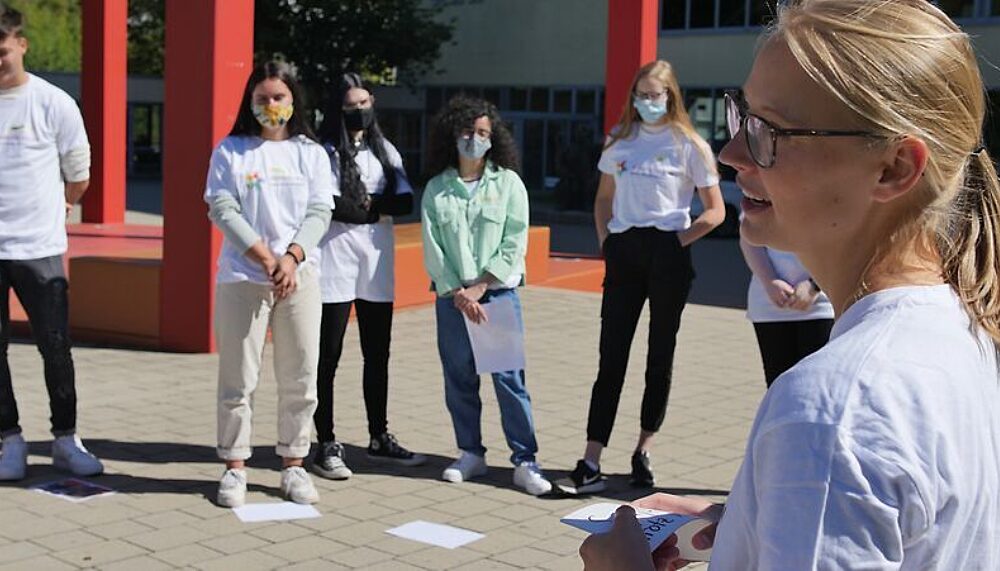
Our colleague Anne Kruck talks about the how young people in Germany engage with conflicts today and what helps them to understand and respond to them.
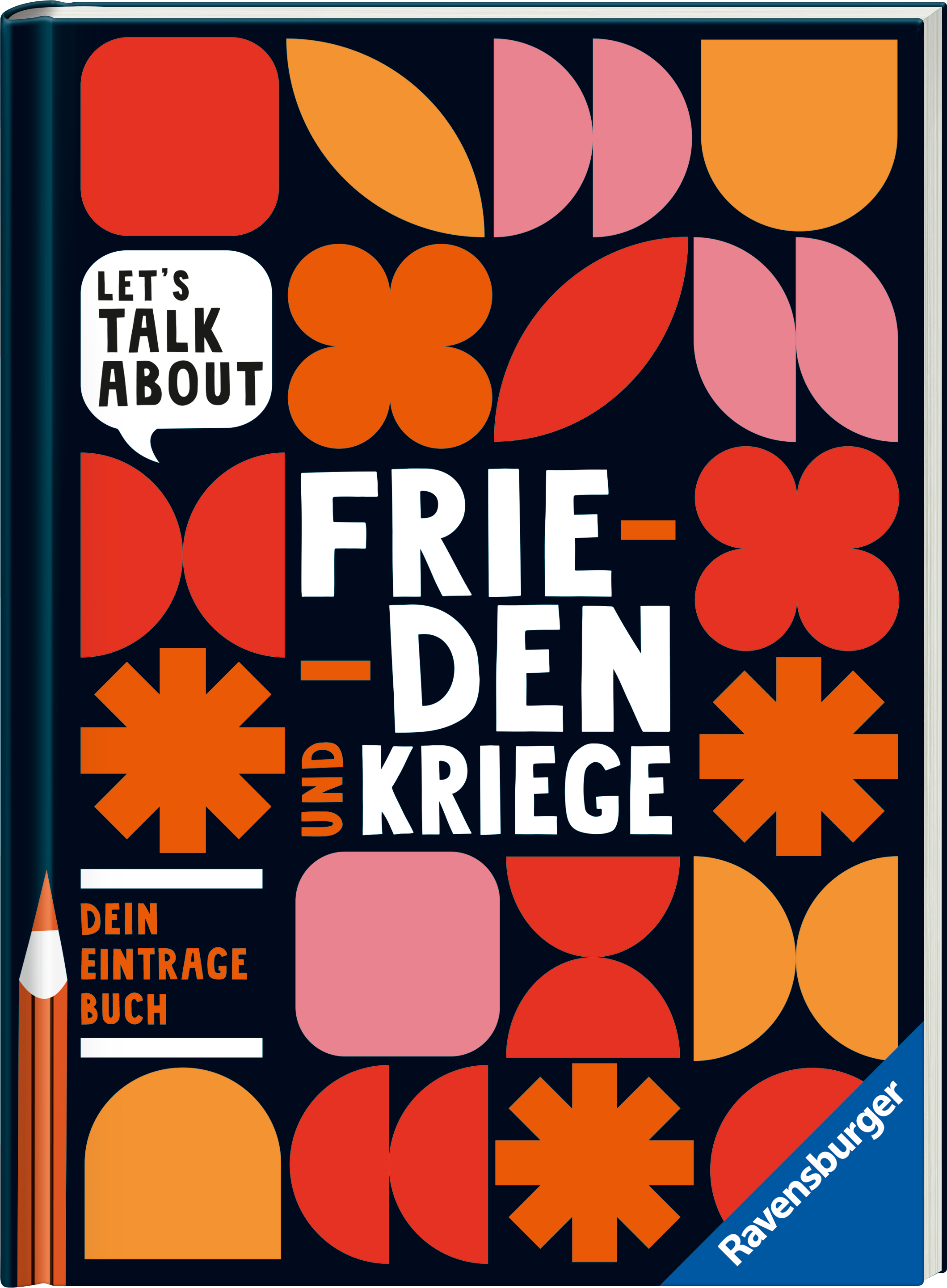
With “Peace and wars” our colleague Cora Bieß authored a non-fiction book for young people aged 12 and up. Anne Kruck, Head of Peace Education Unit and advisor to the book, talks about the importance of peace education, and how the book helps young people to make sense of violent conflicts, wars and peaceful solutions.
This interview was conducted and originally published by Ravensburger Verlag to promote the book “Frieden und Kriege” which was published in cooperation with the Berghof Foundation. Find out more on their website (in German).
At the Leipzig Book Fair, Cora Bieß and Anne Kruck were also interviewed for the podcast “BÜCHERALARM-Talk” (in German).
How important is peace education today?
Anne Kruck: Peace education is about more than passing on information. It helps young people develop attitudes and skills, such as empathy, constructive communication and participation. Today’s young people are growing up surrounded by crises – from wars to climate change. Our role is to offer guidance and tools that show how conflicts can be addressed without violence.
It is especially important that children and young people are actively involved. One example is our “Peace Days” at schools – themed action days that bring topics from the book directly into the classroom.
How does the Berghof Foundation work with young people?
AK: In Baden-Württemberg, we run the Service Centre for Peace Education in cooperation with the State Agency for Civic Education and the Ministry of Education, Youth and Sports Baden-Württemberg. The platform offers lesson plans, worksheets, posters and explanatory videos. It’s also where schools can book workshops for classes and training courses for teachers. We also have our website www.frieden-fragen.de, which serves as an archive with age-appropriate content for young people. Many of our activities are hybrid or digital, so they can be used nationwide.
What can young people expect from Frieden und Kriege?
AK: The book looks at what happens in war, but also how wars and armed conflicts emerge in the first place. It was important to us to address issues such as displacement and migration, as well as highlight pathways to peace.
At the same time, the book offers young readers practical strategies for dealing with conflict in everyday life. Throughout the book, there are stories of people from conflict settings – not portrayed as victims, but as individuals with agency. This isn’t a book meant to be read once and put away. We hope young people will use it as a personal reference and return to it again and again.
Why a journal-style format?
AK: Young people learn in different ways. Some prefer to reflect and write down their thoughts, others learn by trying things out. The reflective questions in the book are invitations, not assignments.
Those who want to delve deeper will find links and exercises – for reading on their own, discussing with others, working with friends or using in class. In the classic “orange story” from mediation, instead of arguing over positions (“Who gets the orange?”), we focus on interests (“What do you need it for?”). That shift in perspective often opens up solutions that would not otherwise be possible.
How do you respond to harsher interactions at school and online?
AK: Children and young people learn from role models. When power and force appear to dominate international politics, those messages reach all the way to the classroom.
Peace education stands for participation and fair rules. When young people are involved in decision-making, they’re more likely to respect shared rules. We also practise language that de-escalates rather than inflames conflict, and encourage young people to name their feelings, respects others’ boundaries and actively look for solutions.
Does the book provide context on current conflicts?
AK: We deliberately decided against brief summaries of current wars because reducing complex conflicts to a few lines would be misleading. Instead, we point readers to reliable conflict analyses – including resources from the Service Centre for Peace Education. We also encourage young people to rely on quality journalism since social media clips often lack context.
What mood do you sense among young people today?
AK: Many are concerned, but also eager to get involved. Studies show that wars are one of their biggest concerns, while at the same time, many feel that politicians do not take them seriously. They are searching for meaning and for ways to make a difference. This is exactly where we come in, fostering a sense of agency instead of powerlessness and grounded hope instead of resignation.
Are you receiving more enquiries now than a few years ago?
AK: Definitely. We’re seeing a clear increase in interest from teachers, school administrators and parents. Many are asking “How can we talk constructively about war and peace?” and “How do we address young people's fears?”.
We can help them contextualise issues, encourage them to accept controversy, and strengthen their dialogue skills. Peace education doesn’t ignore reality; it equips young people with skills for the future. It highlights alternatives, makes the costs of violence visible and strengthens the essentials that every democracy depends on, listening, negotiating and resolving conflicts.
What impact do you hope the book will have?
AK: If, after reading and reflecting on the book, young people put it aside and say, “I'm less afraid – and I have more ideas on what I can do,” then we achieved our goal.
Media contact
You can reach the press team at:
+49 (0) 177 7052758
email hidden; JavaScript is required