STORY
Water mediation across frontlines
Sustained dialogue improves access to water in Taiz, Yemen
Since the Houthis took over Sana’a in 2014, parallel structures were established in Yemen under the internationally recognised government (IRG) and the Houthis. This had dramatic political and economic consequences, has weakened key state institutions, and worsened service provision across the country.
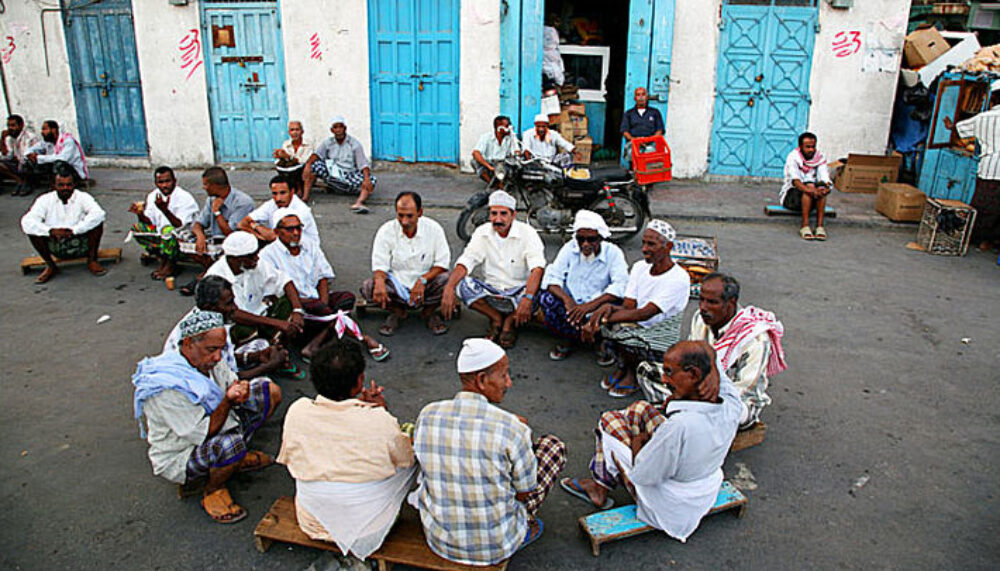
Against this background and in the absence of coordination between state institutions under the IRG and the Houthis, the Yemen Political Dialogue Support Programme (PDSP), implemented by the Berghof Foundation in partnership with the Political Development Forum (PDF), established consultation groups in key Yemeni governorates composed of members of political parties, eminent personalities, women and civil society representatives. Consultation group members convene on a regular basis to identify main issues of concern in their governorate, develop options to address them, and build trust through inclusive dialogue.
The case of Taiz
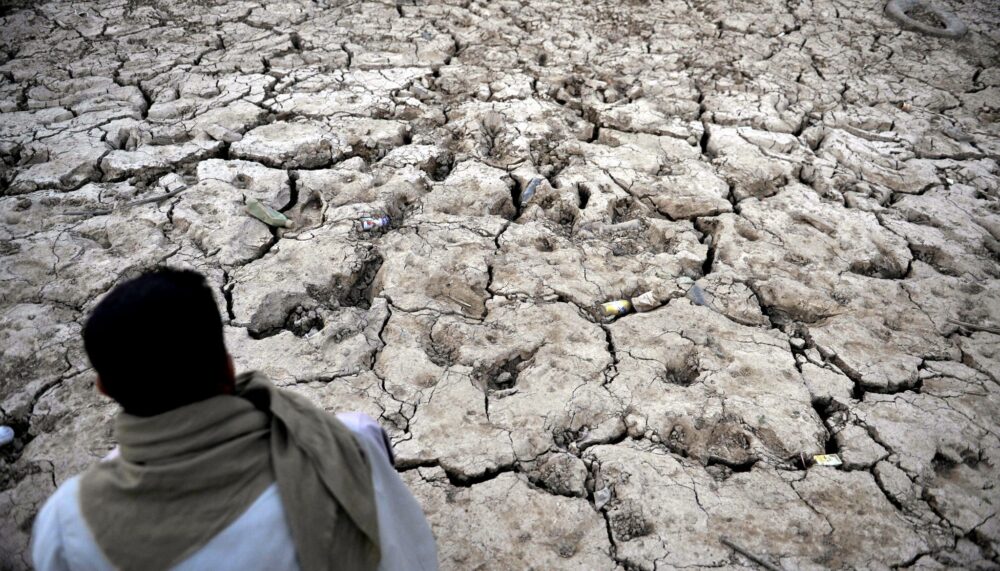
In Taiz, the population has been facing severe water shortages since years. This issue worsened significantly when the Houthis took control of the northern part of the governorate, splitting it between Taiz city (IRG-controlled) and Al-Hawban (Houthi-controlled). This new frontline cuts directly through residential neighbourhoods, creating challenges related to water delivery, amongst others.
What used to be one water supply system became fragmented: the network itself remains physically interconnected, with critical wellfields, pipelines, and reservoirs distributed across both sides. The IRG side holds key reservoirs that historically supplied both areas. Meanwhile, basins and wells in Al-Hawban fall under the Houthis’ authority. No side can operate the system fully and efficiently on its own. Any sustainable solution requires cooperation between the two water authorities to restore water supply and manage the network as an integrated system in service of the city’s residents.
Tackling the water crisis
Members of the Taiz Consultation Group (TCG) noticed during their dialogue sessions that residents of Taiz city have been struggling to secure basic water supply and that this issue should be treated as a main priority. In order to better understand the underlying causes of this crisis, they conducted field visits to the water authorities on both sides. TCG members produced a policy paper that identified the key technical, financial, and political drivers of this crisis and developed solutions to restore water delivery during their year-long investigation.
In 2021, a mediation team led by insider mediators from the TCG and beyond was formed and began liaising between the two water authorities under the Houthis and the IRG.
Working with the Berghof Foundation and PDF has provided me with opportunities to expand my contacts, which supports my efforts as an insider mediator.
Maeen Al-Obaidi, Insider Mediator and TCG Coordinator, Taiz
Maeen Al-Obaidi, coordinator of the TCG and one of the insider mediators, was a key actor in leading the water mediation, using relationships and problem-solving experience built over years of engagement through the TCG and Berghof activities to support stakeholder outreach, follow-up, and progress towards agreement. Ola Al-Aghbari, cofounder of Sheba Youth Foundation for Development, was also involved in the mediation efforts. She drafted additional policy papers on the water issue and proposed more specific and practical recommendations. Among the most important were proposals to withdraw military forces from concrete reservoir sites and local water authority offices within the governorate, and to resume pumping water to both Taiz city and Al-Hawban.
Encouraging local civil society organisations to develop initiatives
Our dialogue space also encouraged civil society organisations to transform discussions into action. The “Water Sector Initiative”, established by Ola Al-Aghbari, mediated with military actors to hand over reservoirs and wells to the water authority in Taiz, helping restore access to clean water for around 41,000 residents.
My presence in the TCG motivated me to delve deeper into the water issue and actively try to address it.
Ola Al-Aghbari, TCG member and cofounder of Sheba Youth Foundation for Development, Taiz
Providing a dialogue space to overcome political challenges
As insider mediators worked on trying to implement the policy papers’ recommendations developed by Ola, the reservoirs handover was the first concrete outcome of the mediation efforts in Taiz city.
Throughout the mediation process, the TCG continued to play an enabling role by providing a regular dialogue space where mediators could share updates, reflect on progress, and raise political challenges they encountered along the way. Thanks to the diversity of the TCG members, representatives of different political parties joined efforts in this initiative and helped in overcoming challenges that might otherwise have derailed the process.
Strengthening inclusive local governance and peacebuilding in Yemen
The Berghof Foundation and PDF have supported local solutions to the water crisis in Taiz also within the framework of another project: Strengthening Inclusive Local Governance and Peacebuilding in Yemen, funded by the German Federal Foreign Office. Since October 2024, insider mediators affiliated with the project have resolved six local water conflicts in the IRG-controlled areas of Taiz and thereby enabled more than 35,000 residents to gain access to running potable water in their homes, noticeably reducing household costs for water consumption.
A second breakthrough followed in March 2025 when the two sides resumed water pumping and began repairing damaged water networks. On 1 July 2025, the UN announced that the Local Water and Sanitation Corporations in Taiz city and Al-Hawban had reached a technical agreement to manage water supply systems across frontlines. The agreement details water supply operations to ensure a continuous flow of water to the city and is expected to significantly improve living conditions by restoring a service disrupted for almost ten years.
The success of this mediation process creates future opportunities for insider mediators to resolve local conflicts. It has shown that by overcoming political challenges and restoring cooperation across frontlines, insider mediators are able to improve basic service provision in challenging conflict contexts like Taiz. This process also highlights that providing a sustained dialogue space, facilitating exchange and consensus-building, and building capacities of insider mediators have enabled them to jointly agree on urgent problems faced by their communities and to develop and implement locally owned responses.
Your support helps us do more
So much money is spent on war. It’s time to invest in peace. Your donation enables us to sustain and expand our work.