Our Library
Explore our publications, from research papers and series to educational materials, covering all aspects of conflict transformation and peace promotion.
De Maputo à SerraConstruir a Paz em Moçambique
Este livro descreve em pormenor a jornada do Acordo de Maputo. Escrito por Mirko Manzoni e Neha Sanghrajka, que apoiaram e facilitaram a mediação e negociação do Acordo, o livro traça passo a passo os esforços meticulosos para construir confiança e credibilidade em circunstâncias muitas vezes desafiantes, com base nas recordações dos próprios autores sobre a mediação e os esforços subsequentes de implementação do Acordo. Perspectivas dos mediadores e de outras pessoas directamente ligadas ao processo dão vida à trajectória única de Moçambique rumo à paz e à reconciliação, bem como à coragem, perseverança e inovação de todos os envolvidos.
- Year2026
- Author(s)Mirko Manzoni, Neha Sanghrajka
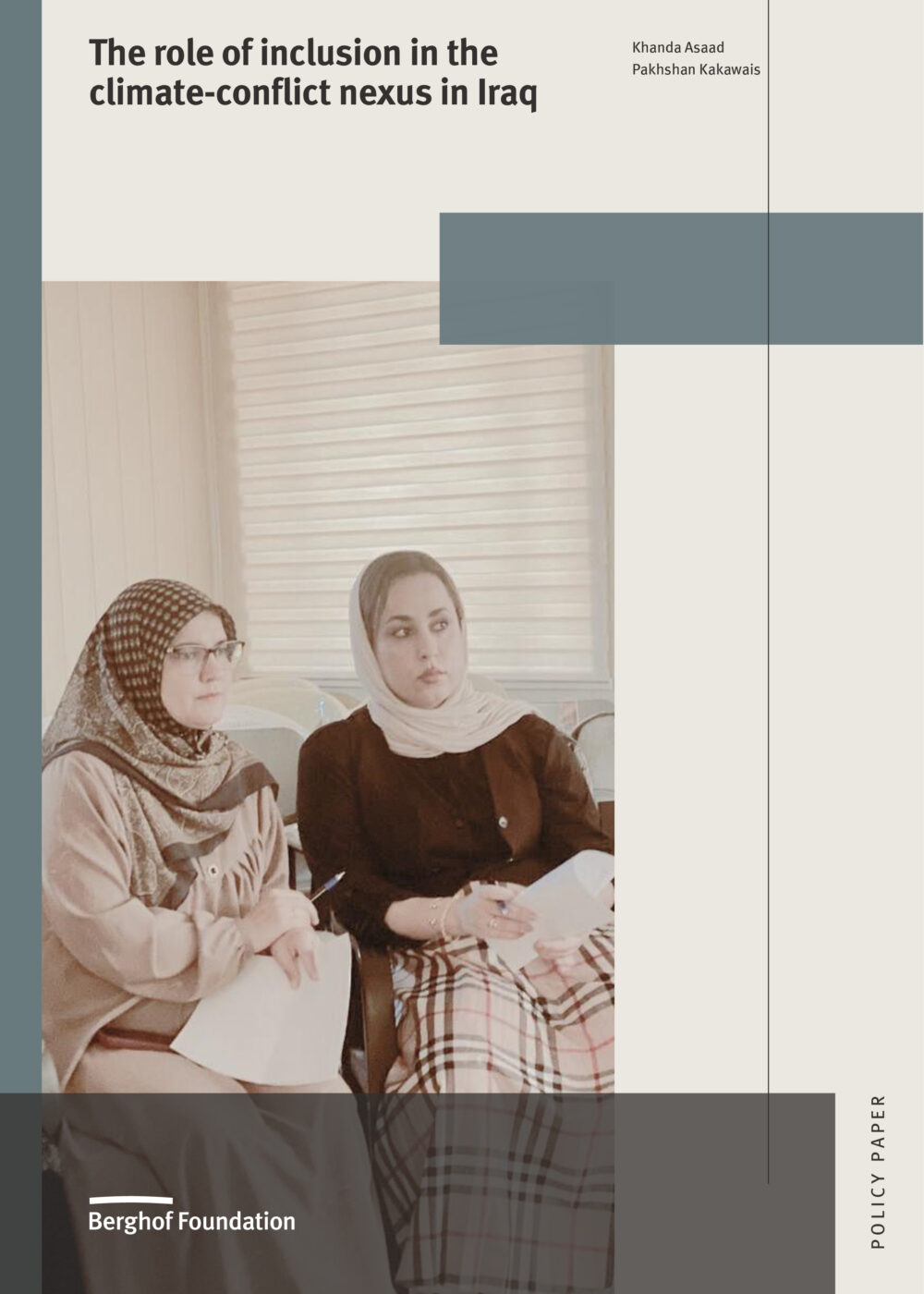
The role of inclusion in the climate-conflict nexus in Iraq
Climate change is intensifying pressures on communities across Iraq. Water scarcity, livelihood disruption, displacement and environmental degradation are affecting social relations and increasing pressures on already vulnerable communities. Focusing on Kalar, Hawija and Al-Midaina, the study examines how these climate-related pressures interact with conflict and social dynamics, with particular attention to their differentiated impacts on women and men. The analysis highlights women’s often-overlooked contributions to informal mediation, household resource management and efforts to prevent disputes over scarce resources, while also identifying their limited participation in formal decision-making on climate adaptation, natural resource management and conflict prevention. The report presents key findings and recommendations for strengthening women’s leadership and integrating climate adaptation, livelihoods, psychosocial wellbeing and conflict prevention to build community resilience.
- Year2026
- Author(s)Khanda Assad, Pakhshan Kakawais
From Maputo to the mountainBuilding peace in Mozambique
This book details the journey of the Maputo Accord. Written by Mirko Manzoni and Neha Sanghrajka, who supported and facilitated the mediation and negotiation of the Accord, it traces step-by-step the painstaking efforts to build trust and confidence in often challenging circumstances, drawing on the authors’ own recollections of the mediation and subsequent efforts to implement the Accord. Insights from the mediators and others closely associated with the process bring to life Mozambique’s unique journey towards peace and reconciliation and the courage, perseverance and innovation of everyone involved.
- Year2026
- Author(s)Mirko Manzoni, Neha Sanghrajka
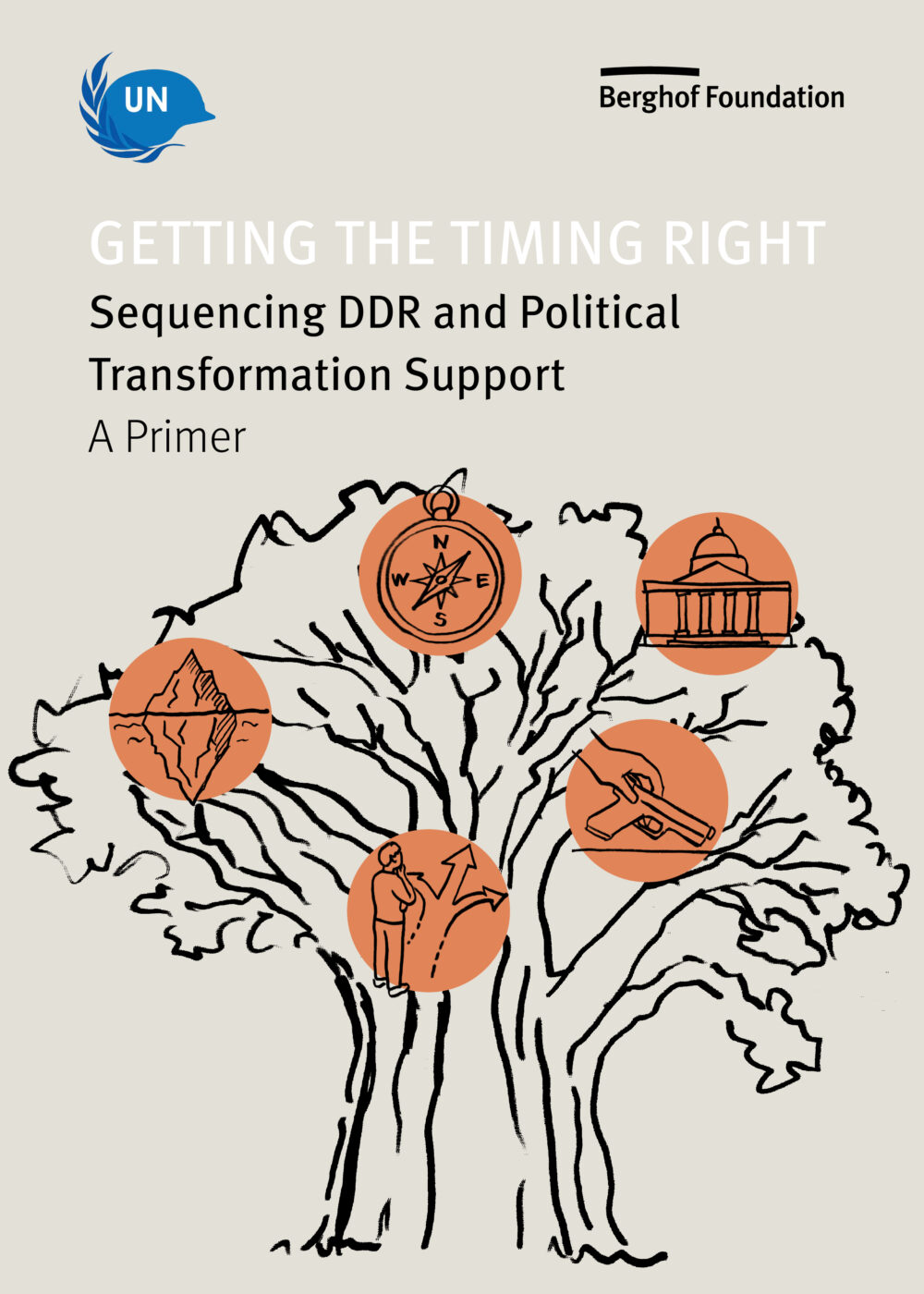
Getting the timing rightSequencing DDR and political transformation support
This Primer provides guidance for DDR practitioners, peacebuilding stakeholders, and international partners on how to sequence DDR efforts alongside political transformation in ways that align and ideally strengthen one another. Using insights from cases like Nepal, Liberia, Northern Ireland, the Philippines, and Colombia, it examines how different sequencing choices affect the relationship between security and political inclusion in post-conflict settings. The document presents conceptual frameworks, comparative case examples and practical principles to help develop more coordinated and context-sensitive strategies.
- Year2025
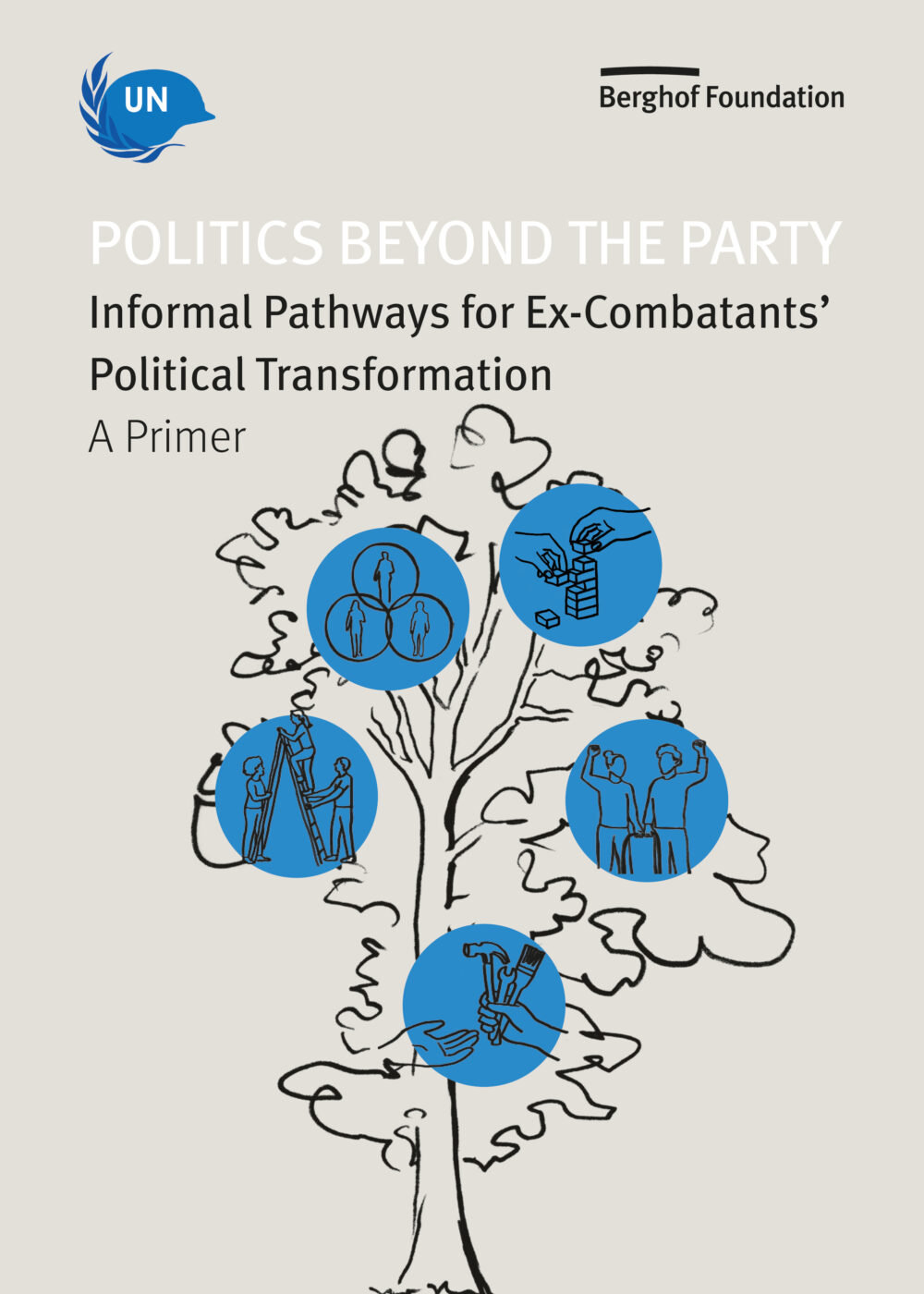
Politics beyond the partyInformal pathways for ex-combatants’ political transformation
The Primer explains the importance of informal political spaces in achieving long-term peace. These arenas are often the most immediate and accessible venues where marginalised groups or lower-level fighters -- including women and young people -- can express their views, develop leadership skills, and take action, especially when formal institutions are inaccessible, exclusive, or no longer trusted. Acknowledging and supporting these peaceful forms of organisation allows DDR and peacebuilding actors to enable ex-combatants to pursue social change without violence, resolve grievances constructively, and rebuild confidence between them and the wider community.
- Year2025

Engendering political transformationGender-responsive support on the political participation of ex-combatants
This Primer guides DDR practitioners, peacebuilders, and partners in promoting gender-responsive political transformation within or beyond DDR processes. It calls for expanding reintegration efforts beyond livelihoods and security to include political participation as essential to lasting peace. Drawing on field experience, it shows how women, men, and gender-diverse ex-combatants face unique gendered challenges in entering politics. The Primer stresses tackling patriarchal norms and integrating gender-responsive approaches across all DDR phases, offering practical tools to support equitable and inclusive political participation for all former fighters.
- Year2025
At and around the tableUncovering the diversity of roles played by women from resistance and liberation movements in peace processes
This paper, the fourth in our policy insight series on gender-inclusive conflict transformation, examines the formal and informal roles played by women in and associated with resistance and liberation movements (RLMs) during peace processes. We conducted focus group discussions, interviews and peer-learning workshops with women from South Africa, Northern Ireland, Colombia, the Philippines, Kosovo and other contexts in Latin America, Europe and Southeast Asia who contributed to peace processes either as formal negotiators or informal peace leaders.
- Year2025
- Author(s)Claudia Cruz Almeida, Fee Högner
Building peace from the inside phase II: Supporting insider mediation for the sustainable transformation of conflictPolicy briefs
The objective of these short policy briefs is to inform national, regional and international institutions on key topics related to insider mediation and to inform the development of more holistic and supportive policies for insider mediators. While women still face cultural, logistical and security barriers in their participation in local mediations, they are able to play critical and unique roles in mediating family, land, socio-economic, and environmental conflicts, contributing to a high success rate of mediation agreements. The value of building and supporting (informal) networks of insider mediators is key in environments that do not always welcome the contributions of civil society and where more flexible and nimble networks can act as early warning and response mechanisms, raising the chances to achieve sustainable and transformative peace.
- Year2024
- Author(s)Marine Jacob, Claudia Maffettone, Stephanie Sarta, Nura Detweiler, Victoria Cochrane
Construire la paix de l’intérieur Phase II : Soutenir la médiation interne pour la transformation durable des conflitsNotes d’orientation
L’objectif de ces brèves notes d’orientation est d’informer les institutions nationales, régionales et internationales sur des sujets clés liés à la médiation interne et d’éclairer l’élaboration de politiques plus holistiques et plus favorables aux médiateurs internes. Bien que les femmes soient toujours confrontées à des obstacles culturels, logistiques et sécuritaires lors de leur participation aux médiations locales, elles sont en mesure de jouer un rôle essentiel et unique dans la médiation des conflits familiaux, fonciers, socio-économiques et environnementaux, contribuant ainsi à un taux élevé de réussite des accords de médiation. La valeur de la création et du soutien de réseaux (informels) de médiateurs internes est essentielle dans des milieux qui n’accueillent pas toujours favorablement les interventions de la société civile et où des réseaux plus souples et plus agiles peuvent servir de mécanismes d’alerte et de réponse précoces, augmentant ainsi les chances de parvenir à une paix durable et transformatrice.
- Year2024
- Author(s)Marine Jacob, Claudia Maffettone, Stephanie Sarta, Nura Detweiler, Victoria Cochrane

The Berlin Moot 2024Report
The inaugural edition of The Berlin Moot conference brought together experts from diverse fields with peace and mediation practitioners to explore how we can reshape peacemaking. Read key findings and recommendations from the conference.
- Year2024