BLOG POST | 13 Feb 2026
We are defunding peace – and calling it security
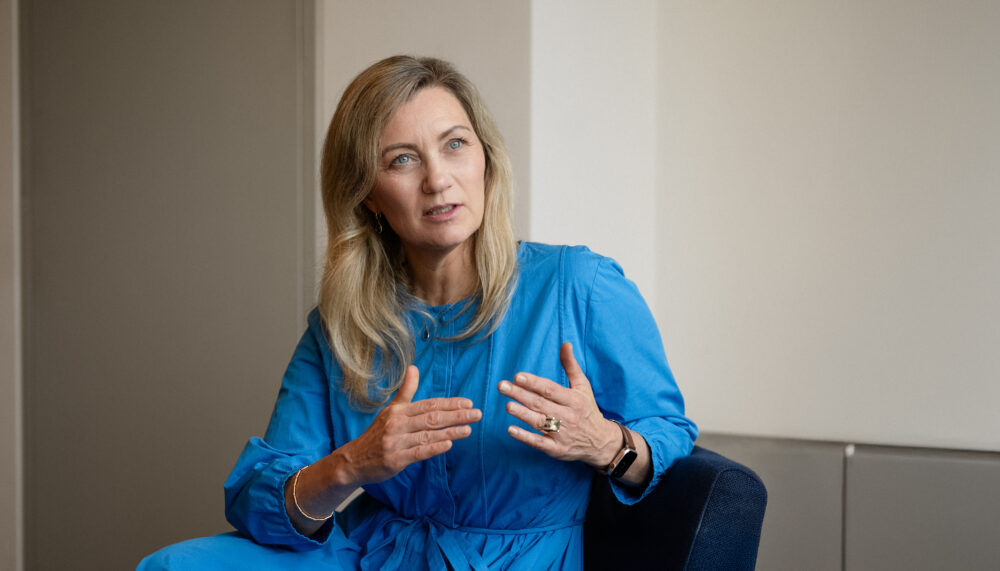
As leaders gather in Munich amid record defence budgets, Chris Coulter argues that lasting security depends on the patient work of conflict prevention and mediation.
By Chris Coulter
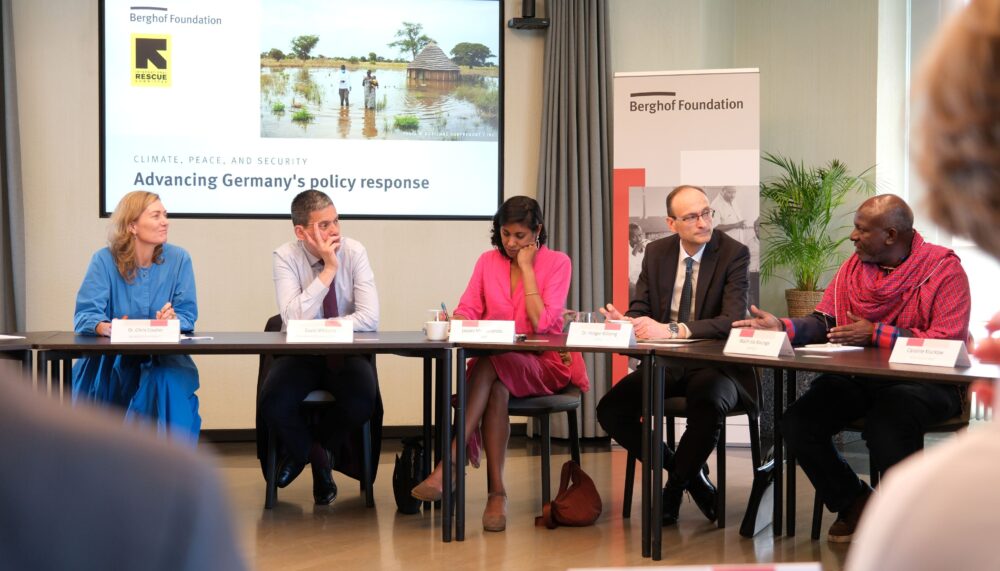
Our Executive Director Chris Coulter moderated a spotlight session on peace deals at the Munich Security Conference in 2026.
Watch the recorded event: www.securityconference.org...
Every February, the world’s security elite, heads of state, civil society representatives and CEOs gather in Munich. The Munich Security Conference has long served as a barometer of the international order. This year, it promises to be a stress test as the global political landscape has shifted in ways that cannot be ignored.
For three decades, many of us who work in peacebuilding – the deliberate, practical work of preventing conflicts, ending violence and helping societies rebuild – operated on the assumption that rules, institutions and norms would gradually matter more over time. That even if progress was slow and uneven, the arc bent towards cooperation and human rights. We built policies on that promise.
Today, that promise is shattered. Shortsighted deals are replacing more carefully constructed and legitimate peace processes. Multilateral commitment is shrinking. Threatening and bullying are louder than dialogue and diplomacy.
Defence alone is a mistake
In my view, it is not just turbulence. It is in fact a rupture in the operating system of international politics.
The logic of international politics is becoming more transactional. Speed is prized over sustainability. Leverage over legitimacy. Whoever holds the guns or pays a billion gets a seat.
We are pouring money into potential wars while starving the work that stops them in the first place.
At the same time, we have seen trillions invested in military and security infrastructure, while aid budgets have shrunk and funding for conflict prevention has been cut. Global military expenditure hit $2.7 trillion in 2024 – the steepest year-on-year rise in decades (SIPRI). In contrast, the OECD found a 9 per cent drop in official development assistance in 2024. We are pouring money into potential wars while starving the work that stops them in the first place.
But that trend is deeply misguided. Military power alone is not the answer.
Security and peace must always be understood as intrinsically linked. The threat of war in Europe continues to be real. And yet believing that military investment alone can guarantee our security is a mistake. True security depends on diplomacy, mediation and conflict prevention.
While politicians talk about security with growing urgency, they are cutting precisely the tools that make security durable.
Conflict prevention is not only morally right, but a smart policy
We are witnessing more violent conflicts than at any time since World War II. Many of these conflicts are protracted and increasingly cross borders, destabilising entire regions and demanding cooperative, multilateral responses.
However, funding for non-military interventions is at an all-time low. We must invest in peace as the morally right, strategically sound and economically responsible choice: doing so protects communities, reduces the cost of violence and creates real security for the future.
The World Bank estimates that, even if only 50 per cent of conflict prevention efforts are successful, $16 is saved for every $1 invested. It is smart to invest in prevention.
And yet it is always the first thing to be cut.
Dialogue and mediation take time but deliver real results
Part of the problem is that prevention is quiet; there are no victory parades for wars that never happened. Mediation is often slow, painstaking and largely invisible. I have spent long nights in negotiation rooms where progress is measured in millimetres. But it is precisely that careful work that makes agreements durable.
There are no victory parades for wars that never happened.
Look at the Colombian Peace Agreement: Transforming decades of violence into a negotiated solution took years of talks, many failed attempts and a lot of trust in a long-term process. And the signing ceremony was only the beginning. The real work came after: implementation is ongoing and fragile, many people make sure the peace holds day by day.
Peace is a process that only survives if we invest in it.
Europe has a choice. It can simply follow the global race to rearm, or it can reaffirm its role as a leader in supporting lasting peace around the world.
As other global powers are investing less and less in peace, Europe can and should step up to fill the gaps to show that security means more than bigger arsenals. This will strengthen the perception of the EU’s external action worldwide and contribute to European security without compromising its values.
A world of connections rather than deals
In a world obsessed with deals, relationships become strategic assets.
If we want peace that lasts, we must invest in connections. We see this in networks of women mediators at all levels, in regional coalitions, or in partnerships between governments, civil society and academia. These are not symbolic gestures. They are much-needed infrastructure. They keep dialogue alive when formal channels collapse. They carry trust across divides that official diplomacy cannot reach.
The future of peace may depend less on who speaks on the main stage and more on who builds the quieter coalitions in the margins – the ones that insist security means safety for people, not just stability for states.
The question for this year’s conference is simple: are we still trying to defend yesterday’s order – or are we investing in the peace we claim we want?
Media contact
You can reach the press team at:
+49 (0) 177 7052758
email hidden; JavaScript is required