Mapping peacebuilding efforts across Hirshabelle State, Somalia
Discover how peacebuilders in Somalia are connecting to ease tensions and build peace within their communities.
The Insider Peacebuilders Network (IPN) lies at the heart of the Berghof Foundation’s longstanding work with locally led peacebuilding in Somalia. Established in Hirshabelle State in 2015 and later expanded to Galmudug and South West States, the network has grown into a community of around 120 members across 15 districts.

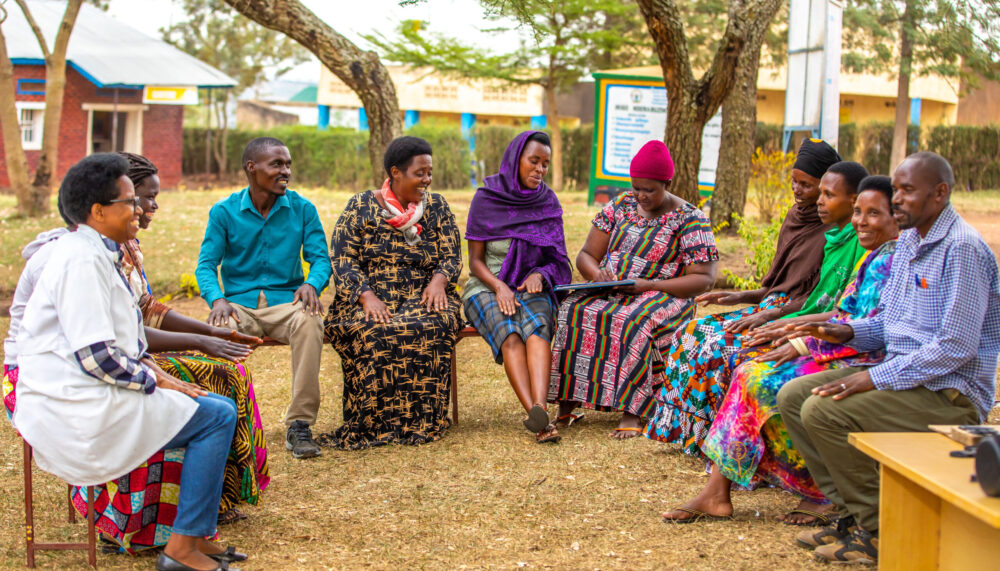
From the outset, the IPN was designed to bring together people with different roles and perspectives. Elders, women, youth, religious leaders, educators, and poets all have a place in the network, each contributing their own knowledge, relationships, and skills. This diversity, rooted in the local legitimacy, is what makes the IPN such a vital part of Somalia’s local infrastructures for peace.
Through collaborative learning in the dialogue and mediation workshops we organised, members have strengthened their ability to work within their own communities and across conflict divides. In practice, this means identifying tensions before they escalate and drawing on trusted relationships to de-escalate them. It also means bringing new voices into processes that have traditionally relied on a narrower group of actors, and looking beyond an immediate dispute to the underlying issues that can fuel cycles of recurring violence.
Network members also create opportunities for divided communities to meet, whether through sport, joint environmental activities, or other shared initiatives that help rebuild trust and relationships. Through storytelling, drama, radio programmes, and dialogue, they create spaces where people can listen to different perspectives and explore ways of addressing conflict without violence.
Much of this work has long gone unseen beyond the communities where it takes place. To make it visible, and to strengthen connections between network members, we launched a digital mapping platform. Members shared stories, images, audio, and video, each linked to a location, creating a growing map of peace. The map also let peacebuilders see where similar challenges were emerging, learn from one another, and identify local hotspots, supporting more timely and targeted responses to rising tensions.
The stories that follow are told by IPN members themselves. Explore them through the map below, or browse the list underneath.
Read how they work to build lasting peace in their communities.
Ali’s story about a conflict over a canal
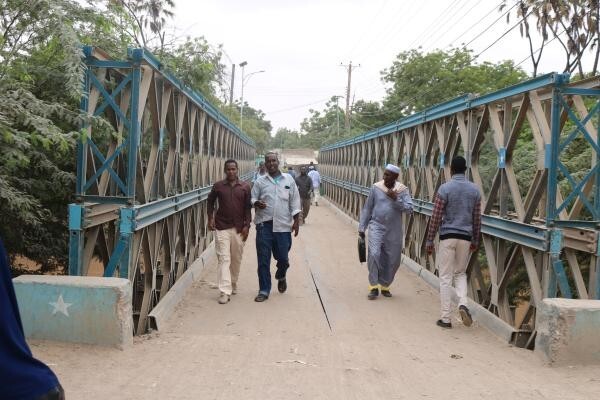
Ali’s story about a conflict over a canal
Location: Bulla Burte
In the quiet town of Dayib, in the district of Bulla Burte, a canal became the centre of an extraordinary tale. More than just a waterway, the canal was a lifeline for the community and their animals.
But this peaceful existence was disrupted when a man who, living near the canal, came into conflict with his neighbours. He claimed the canal as his own and insisted that no one could access the water without his permission.
Tensions quickly escalated. Arguments became a daily occurrence, and the situation reached breaking point when the man seriously injured one of his neighbours. In response, the victim’s relatives began calling for revenge, raising fears that the dispute could spiral into a larger clan conflict.
One community member, deeply concerned that the violence could escalate further, contacted the Insider Peacebuilders Network (IPN). Once the IPN learned about the situation, they moved quickly to intervene and help restore calm in the community.
The peacebuilders brought both sides together for dialogue. They listened carefully to the man’s concerns and sought to understand why he felt so strongly about controlling access to the canal. He explained that for years, people crossing his land to reach the water had damaged his crops and property. Frustrated and exhausted, he felt he could no longer tolerate the situation.
The man agreed to provide Diyyah, the customary financial compensation paid to the victim, but remained firm that people should no longer trespass on his land. In his view, the canal entrance formed part of his property, and he wanted his land and crops protected.
The IPN worked to bridge the growing divide between the two sides. Together, they developed a practical solution that addresses the concerns of both the landowner and the wider community. The townspeople agreed to work collectively on the man's land once a week, helping to farm the area and build a designated pathway leading to the canal. This would allow the community continued access to the water while protecting the man's crops from accidental damage.
In a remarkable turn of events, both parties accepted the agreement. The canal once again became a source of cooperation rather than conflict. More than a year later, the agreement still holds, and no further grievances have been reported. Today, the people of Dayib continue to live in peace and cooperation.
Abdulqadir’s story about changing the culture and role of traditional elders
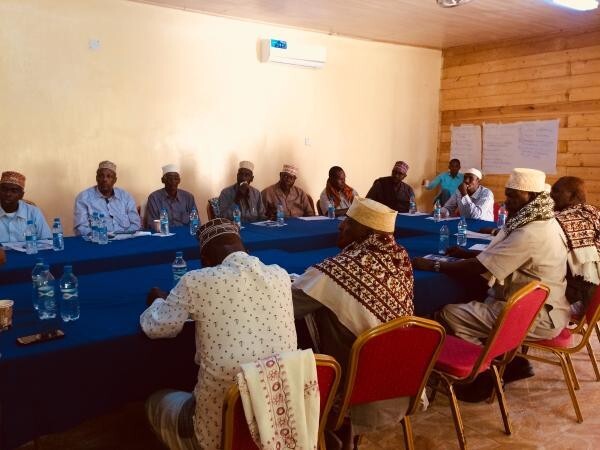
Abdulqadir’s story about changing the culture and role of traditional elders
Location: Two villages near Jowhar
Two clans from the villages D* & M*, two farming communities near Jowhar, became embroiled in a violent conflict over contested land along the border between their villages. Tensions had existed for many years, but during the most recent escalation, up to ten people lost their lives in the fighting.
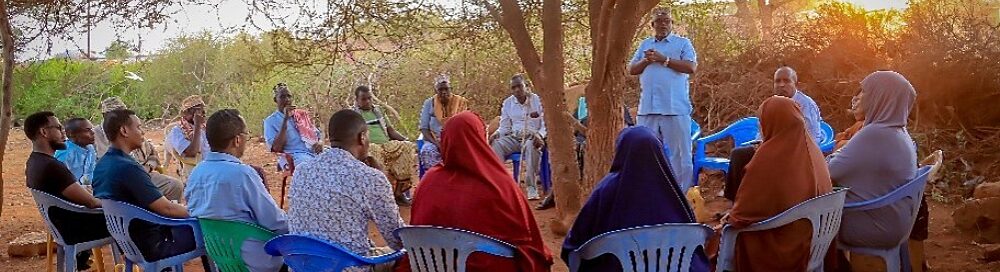
When we, the IPN cohort in Jowhar, heard about the violence, we immediately reached out to the elders from both communities to help contain the situation and prevent further bloodshed. We met separately with the elders from each side, moving back and forth between them in an effort to build trust and open communication. Through these discussions, we were able to mediate an initial ceasefire and secure a commitment from both parties to participate in a traditional Somali peace dialogue held under a tree.
As our efforts progressed, the regional administration of Middle Shabelle became aware of the work we were doing. The district commissioner thanked us and invited the IPN of Jowhar to continue leading the mediation process. He said that “the IPN must be part of the official mediation process between both villages, as they were the ones who managed to secure this first ceasefire.”
However, some of the more traditional elders disagreed with our continued involvement. They believed that the formal negotiations should remain solely in the hands of the elders, in accordance with tradition. Since the IPN is made up of a diverse and young group of peacebuilders, they feared our participation might undermine established customs.
To protect this fragile opportunity for peace and respect the role of the elders, we decided to step back from the formal negotiations and hand over the mediation process to the elders and the regional administration of Middle Shabelle.
At the same time, we remained committed to supporting the peace process in any way we could. Together will all parties, we agreed to organise conflict resolution and transformation training for the communities involved. This proposal was warmly received, and we hosted 15 elders from each village in a series of workshops.
This training created a remarkable exchange, not only between the elders from both villages, but also between the elders and us. Even some of those who had initially been critical of our involvement, became more open to engaging with the IPN after the workshops.
By the grace of Allah, the elders began peaceful negotiations immediately following the training and eventually reached an agreement regarding the disputed land. The district commissioner formally documented the agreement between the elders and the villagers. Under the agreement, both communities committed to meeting together at the start of each rainy season, when the land is renewed, to cultivate the contested area jointly. Most importantly, both villages agreed to see one another as brothers and sisters and to strengthen their sense of unity beyond village boundaries.
Maryan’s story about neighbourhood peacebuilding
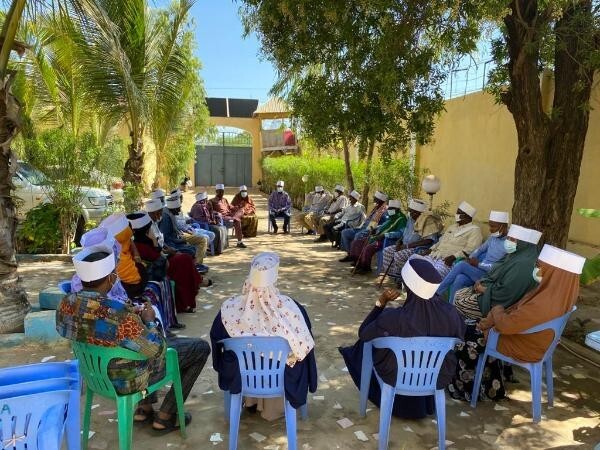
Maryan’s story about neighbourhood peacebuilding
Location: Beledweyne
Assalamu alaikum wa rahmatullahi wa barakatuh. My name is Maryan, and I live in the city of Beledweyne in the Hiiraan district. The conflicts I speak about take place in and around Beledweyne, where I focus my mediation and peacebuilding efforts.
The conflicts we most often witness in our area are violent clashes that involve the looting and destruction of resources, frequently leading to the loss of income, property and livelihoods for the local people. In one recent, and unfortunately not uncommon, case, the fighting involved two neighbouring communities who are considered “walalo” (brothers and sisters belonging to the same people).
What has happened in recent years is that different interest groups, including politicians, business actors and opposition groups, have fuelled tensions among communities by influencing people’s perceptions of ownership and rights, encouraging them to turn again on one other.
Those two neighbouring communities held opposing views over the rightful ownership of farming and grazing land. Each side strongly believed the land belonged to them. As a result, the areas surrounding cultivation and grazing in and around the city have experienced longstanding and repeated conflict.
In many cases, I first hear about tensions through rumours and warnings shared within the neighbourhoods. But often, even before conflict erupts, we can already feel resentment and mistrust growing in the community. During such times, unrest spreads and people become divided.
Since becoming part of the IPN network in Beledweyne, I have held closely to one guiding principle: "People in agreement can build a peaceful community that holds enough space for us all!" This principle guided me during the face-to-face mediation between the two conflicting neighbourhoods. Together with other IPN members, I focused on helping both sides reach a shared understanding by emphasising what connects us as people rather than what divides us.
During the mediation, I wrote the words “Reconcile! Preserve land and children!” on a white piece of fabric in front of the gathered community members. For me, this symbolised the importance of protecting the land not only for ourselves, but also for future generations.
Today, I am grateful to say that the two neighbourhoods have resolved their conflict. They now see each other again as “walalo” and are working together on shared solutions for land use and grazing.
To mediate conflicts means listening to and understanding many different perspectives – including those of people who may distrust me as a peacebuilder. As a woman, my role as a mediator is sometimes questioned by some of the men involved in these conflicts. At times, they tell me to go home or focus only on my family responsibilities.
But there are many more people who support me and take part in my work. They know I am guided by strong peacebuilding principles: to prevent violence and harm from escalating, to remain neutral, to avoid making promises I cannot guarantee and to stay authentic and sincere in my commitment to sustainable peace.
READ ADDITIONAL STORIES
- Qamar’s story about domestic dispute turned into wide clan conflict
- Ali’s story about conflict with sub-district representatives
- Anonymous’ story about the power of religion
- Ali’s story about a conflict over inheritance
- Ruqiya’s story about conflict beginning on the playground
- Arrays’ story about conflict among neighbours
- Arrays’ story about a domestic conflict
- Arrays’ story about a conflict between two brothers
- Arrays’ story about conflict between schools
- Ruqiya’s story about navigating a marital stalemate