STORY
A Sustained Dialogue process brings communities together in Somalia
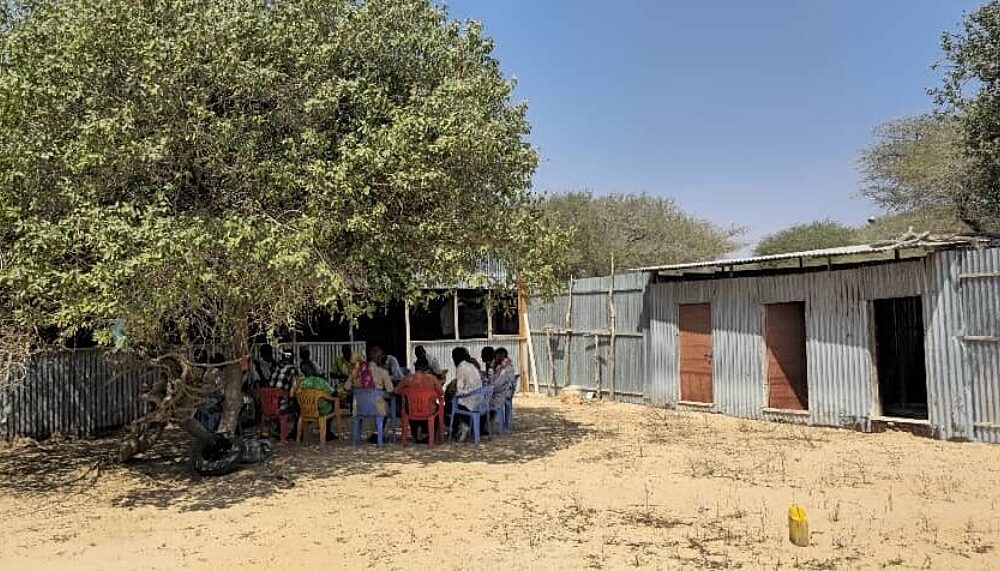
In Somalia’s Middle Shabelle region, two communities, whose relationship had been marked by recurring violent conflict for nearly 20 years, are once again sharing grazing land and trading in a revived weekly market. When a recent dispute turned violent, members of both communities stepped in to de-escalate tensions and prevent a cycle of inter-communal violence and revenge killings.
These changes were made possible by a Sustained Dialogue (SD) process involving key community members and the district administrations, facilitated by the Berghof Foundation. By focusing on shared environmental pressures as an entry point, the process helped rebuild trust after decades of conflict.
How climate stress intensifies conflict
Climate stress and armed conflict shape everyday life in the areas. Between 2022 and early 2025 alone, more than 140 violent incidents and 1,200 fatalities were recorded. At the same time, recurring droughts, erratic rainfall, desertification and wider environmental degradation are putting fishing, pastoralism and rain-fed agriculture under increasing pressure.
As grazing land and water become scarcer, competition between communities has intensified, particularly where clear land ownership is unclear. Periods of relative calm can give way to sharp escalation of violence as control of the land and other resources shifts among state forces, militias and non-state armed groups. Climate stress therefore compounds existing insecurity and inter-communal tensions.
Building dialogue from the ground up
In response, the Berghof Foundation and local administrations supported the creation of two committees, each made up of 30 representatives from the respective communities. The committees embarked on a SD process, a structured, locally led, long-term approach to dialogue that brings together elders, youth, women and religious leaders to rebuild trust and develop joint solutions to deep-rooted conflicts.
During the first six months, the two committees met separately to strengthen the members’ dialogue skills and prepare to jointly engage with the neighbouring community. In these sessions, they examined links between environmental pressures and conflict and identified possible responses.
Both committees identified drought, water scarcity and shrinking grazing land as shared challenges affecting everyone. Their similar analysis provided common ground for joint sessions and shifted the focus away from divisive, politically charged topics.
The committees then began meeting across community lines. In two sessions, each committee hosted the other in their location, while ensuring everyone’s safety. Committee members later described seeing each other as “one big family” whose members support and care for one another.
Throughout the dialogue process, participants also rediscovered family ties and renewed longstanding relationships, gradually developing a shared commitment to reunite their broader communities and address the issues that had divided them.
Preventing retaliation through collective action
Even when renewed violence made in-person sessions difficult, SD committee members continued engaging across conflict lines to build bridges between the communities. This proved critical after an incident that could have triggered the familiar pattern of retaliation and wider inter-community violence.
Committee members helped calm tensions and reframe the incident as an individual legal matter rather than a collective grievance. At the same time, young committee members used their communication networks to encourage restraint and respect for both formal and traditional justice processes. By doing so, the SD committee members managed to prevent another cycle of revenge killings between the communities. For many, the experience demonstrated for the first time how dialogue and collective action could break a cycle of violence that had endured for generations.
For many, the experience demonstrated for the first time how dialogue and collective action could break a cycle of violence that had endured for generations.
Sharing grazing land again
Years of hostility had turned the land between the communities into a “no-go zone”, preventing communal grazing and deepening hardships for pastoralists and farmers on both sides.
The committees identified shared grazing access as a practical first step towards cooperation. They established communication networks among pastoralists, key community stakeholders and decision makers, and advocated for safe, coordinated access. Gradually, cautious coordination developed into renewed cooperation, allowing both communities to safely let their livestock graze across previously contested areas.
Reviving trade
The reopening of a weekly market is one of the clearest signs of renewed trust. Insecurity and mistrust had brought trade between the communities to a halt, but the market now serves again as an economic hub for the wider area.
Every Friday, people exchange livestock, crops and other goods in a space both communities consider safe. These regular interactions create practical interdependence and make the benefits of cooperation visible.
Sustaining the momentum
The changed relationship between these two communities shows how sustained, locally led dialogue can shift even entrenched conflicts. Shared environmental pressures offered an entry point, while repeated engagement gave trust and cooperation time to develop.
Protecting and building on these gains will require continued engagement and adaptive support. But the two communities’ experience demonstrates what patient, community-led peacebuilding can achieve.
This impact story was adapted from a version originally published on the Weathering Risk initiative website by adelphi.
Your support helps us do more
So much money is spent on war. It’s time to invest in peace. Your donation enables us to sustain and expand our work.