A word from our Executive Director
Our annual report 2025
Chris Coulter reflects on how we intensified our peacebuilding efforts in response to a challenging global context.
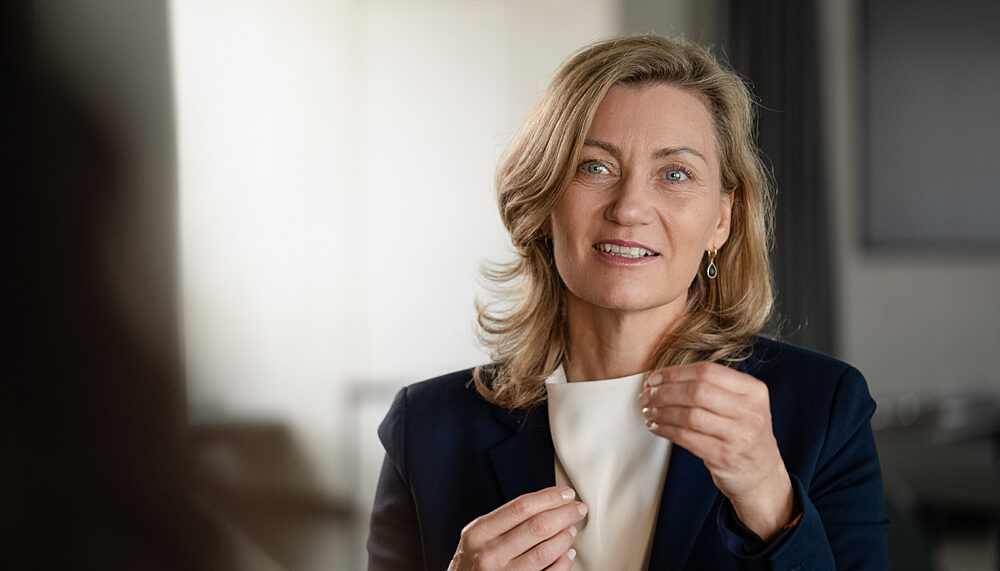
2025 was yet another year in which armed conflict shaped the lives of people across the world. Conflicts are lasting longer, becoming more complex and are increasingly intertwining with climate pressures, economic hardship, technological change and geopolitical competition. While respect for international humanitarian law has come under growing strain, multilateral institutions and the United Nations face mounting pressure to uphold the principles on which collective security depends.
With that, we are witnessing a profound geopolitical shift. The assumptions that shaped international cooperation for decades are being challenged by sharper power rivalries, more transactional foreign policies and a weakening commitment to shared rules and institutions. In many conflicts, regional and global powers are becoming more directly involved, too often pursuing strategic interests rather than collective solutions. This makes peace processes more fragmented, but it also makes independent and trusted spaces for dialogue and mediation more indispensable.
For Berghof, this changing landscape is not an abstract backdrop. It shapes who is willing to talk, which actors have influence, and how space for inclusive peacebuilding can be protected. At a time when multilateral systems are under pressure and security debates are increasingly dominated by military responses, we need to make the case that dialogue, mediation and conflict transformation are not soft alternatives to security policy. They are essential tools for navigating a more contested world.
Mediation and conflict transformation are not soft alternatives to security policy. They are essential tools for navigating a more contested world.
Recent developments have brought these dynamics into even sharper focus. The US-Iran war, and the renewed escalation between Israel and Lebanon, have had grave implications for the region and beyond. Disruption to maritime routes through the Strait of Hormuz has affected energy markets and contributed to rising costs for fertiliser and chemicals, with consequences for food security far beyond the Middle East that are felt most severely in countries already affected by conflict, poverty and climate change.
We face a world that is investing heavily in preparing for war while efforts to prevent violence and sustainable peace are increasingly sidelined. Global spending on peacebuilding and peacekeeping has declined substantially over the past 15 years, even as the human and economic costs of violence continue to rise. Yet the demand for mediation, dialogue and conflict transformation has not diminished. On the contrary, we are receiving more requests for support from actors seeking ways to address political grievances, rebuild trust and reduce the risk of escalation.
This confirms a central lesson of Berghof’s work: Defence may deter threats, but it cannot address the underlying causes of conflict on its own. It cannot rebuild relationships between divided communities, create inclusive political processes or restore trust in institutions. Mediation and peacebuilding must be understood as essential elements of a credible security architecture, not as an optional addition once crisis has already taken hold.
Recognising that sustainable peace depends on inclusive processes, we reinforced our commitment to women’s meaningful participation in peace processes. As 2025 marked the 25th anniversary of UN Security Council Resolution 1325 on Women, Peace and Security, we used the occasion to urge governments and international institutions to move beyond commitments and actively support women’s inclusion in formal negotiations and peacemaking processes.
Throughout 2025, Berghof continued to support people working for peaceful change in some of the world’s most challenging contexts. In the Horn of Africa, we deepened our engagement in Ethiopia, supporting dialogue efforts in Tigray, Oromia and Amhara, while strengthening local infrastructures for peace in Benishangul-Gumuz. In Somalia, we expanded our network of insider peacebuilders across Galmudug, Hirshabelle and South West State, and developed our environmental peacebuilding approach further in response to the growing links between climate pressures and local conflict.
We amplified our work in Sudan, where we supported insider mediators and helped create spaces for dialogue across political and societal divides. In Ukraine, we worked to strengthen social cohesion, community dialogue and women’s leadership within diplomatic institutions, and in Yemen we supported dialogue on future political arrangements while helping local actors restore services and resolve disputes across frontlines. Our climate-focused mediation work in Iraq contributed to new local water governance structures and informed national climate policy.
Our team in Beirut, showed remarkable resilience, enabling operations to continue despite severe strain on the country’s already fragile social and political environment. Through their commitment, we continued to support intra-Lebanese dialogue, reconciliation and participatory governance at a time when social cohesion was under growing pressure.
Wherever people continue to choose dialogue over violence and division, there is reason for hope, and we remain committed to supporting their efforts to build lasting peace.
All that Berghof achieved in 2025 was made possible by the dedication and expertise of our staff. I am deeply grateful to my colleagues for their dedication in navigating a demanding year with professionalism, care and determination.
We are equally grateful to our partners around the world, particularly those working directly with communities in challenging and, at times, dangerous circumstances. Their knowledge, trust and leadership are central to the impact of our work. None of this would be possible without the continued support of our donors, which enables us to sustain long-term engagement and respond to emerging needs.
The need for peacebuilding has rarely been more evident. Peacebuilding organisations like Berghof have the responsibility to ensure that dialogue, mediation and locally led conflict transformation remain central to how societies respond to violence and build more peaceful futures. While the challenges ahead are considerable, the commitment and leadership of our partners and the communities we work with remind us that peace remains achievable. Wherever people continue to choose dialogue over violence and division, there is reason for hope, and we remain committed to supporting their efforts to build lasting peace.